
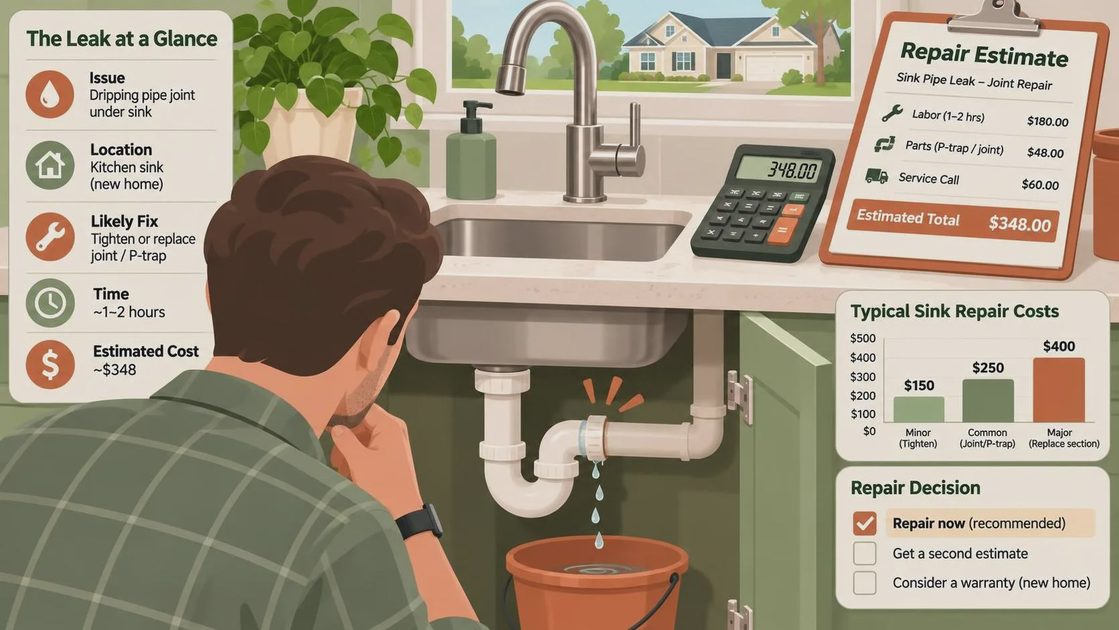
$340 to $411 is a reasonable starting estimate for a straightforward plumbing leak repair under favorable conditions. Add hidden access, wet materials, or a leak beneath the slab, and the bill can climb into the thousands. The cost of fixing plumbing leaks in new home purchases depends less on the price of the fitting than on what has to be opened, dried, and put back afterward. A severe leak with water damage can exceed $15,000.
Those are budgeting ranges, not bids. Location, emergency service, finishes, and the extent of damage matter. Before accepting a builder’s “minor leak” description, find out whether that means a loose connection in an open cabinet or a wet ceiling below a shower. Those are different jobs with different invoices.
What the cost of fixing plumbing leaks in new home construction includes
A basic repair estimate of roughly $340 to $411 can cover labor and supplies to locate and repair an accessible leak when conditions are favorable. It is not a reliable allowance for a saturated cabinet, damaged stone, or a plumber cutting through a finished ceiling.
Use these broader planning ranges to frame the problem:
A supply-line leak may cost roughly $190 to $1,500 to repair. An exposed connection at a sink generally presents less access work than a line buried behind tile. A drain or waste-line leak can run approximately $150 to $4,700, depending on location and scope. Those ranges should not be treated as complete restoration budgets.
A serious concealed or slab-related leak, especially one accompanied by flooding and damaged finishes, can exceed $15,000. Not every slab leak reaches that number. The distinction is whether the job stops at a localized pipe repair or expands into demolition, drying, and reconstruction.
For a new build, I want two numbers: the cost to stop the water and the cost to return the house to its pre-leak condition. A quote that supplies only the first number is not a repair reserve. It is a partial receipt for a problem that is still open.
Where a small leak becomes an expensive repair
Access is the first multiplier. A plumber may reach a supply connection through a vanity in minutes. A failed connection behind a tiled shower wall can require removing tile and backing before the plumber can even see it. Restoring waterproofing and matching finishes may cost more than the pipe work itself.
Duration is the second multiplier. A fresh drip caught before finishes get wet is one job. Water that has traveled under flooring or into a ceiling assembly may require moisture assessment, removal of unsalvageable material, drying equipment, and follow-up measurements. A dry-looking paint surface does not establish that the cavity behind it is dry.
The water source matters, too. A clean supply-line leak and a waste-line leak do not present the same cleanup problem. Wastewater contamination can change what must be removed and how the area is handled. Do not assume that drying a stained surface alone is an adequate response to a drain leak.
Finally, consider the finish package. A small ceiling opening may be straightforward to patch, but a seamless finish can require painting a larger section for a consistent appearance. Custom millwork, specialty plaster, large-format tile, and stone make a generic “patch and paint” allowance especially thin.
Build a reserve from the actual scope
Ask for an itemized estimate with separate amounts for leak detection, access and demolition, plumbing, drying or cleanup, and finish restoration. If a contractor excludes any of those tasks, put a number beside the exclusion before treating the quote as the total. Confirm whether permits, inspection fees, and emergency charges apply locally and whether they are included.
Here is an illustrative calculation, not a market quote: $400 for an accessible plumbing repair plus $600 for opening and patching a wall plus $500 for finish work produces a $1,500 scope. Add a 20% contingency for concealed conditions and the working reserve becomes $1,800. If the wall is already open and dry, those restoration allowances may be unnecessary. If it contains extensive wet material, they may be nowhere near enough.
For an unresolved concealed leak, get a written assessment before choosing a contingency. A percentage cannot compensate for not knowing whether the pipe is behind drywall or beneath a slab. I would carry a separate allowance for an uncertain scope and revise it after the leak is located, rather than burying a guess in the plumber’s line item.

Ask each bidder to identify what happens after the wall is opened. Does the price include removing and disposing of damaged material? Who measures moisture before closure? Who reinstalls the cabinet or tile? A builder can produce a perfectly accurate plumbing quote that leaves three other trades for you to coordinate.
What to document before closing or requesting warranty work
Photograph the staining, the fixture or pipe involved, and the wider room so the location is clear. Note when you observed moisture and whether the fixture was running. Request the builder’s written diagnosis and repair plan, including which surfaces will be opened and how the area will be checked before it is closed.
Do not confuse a visible patch with proof that the leak is resolved. Ask for a suitable post-repair check of the affected plumbing, plus moisture readings or other documentation appropriate to the damage. A supply leak may be checked differently from a drain that leaks only while a shower is operating. The repair team should explain what it tested and under what conditions.
If work is promised before closing, ask when it will be completed and arrange an opportunity to inspect the finished repair. For warranty work after closing, keep the original report, photographs, communications, and completion records together. Coverage, exclusions, and reporting deadlines vary, so review the actual warranty documents rather than assuming every resulting finish repair is included.
If water is actively flowing, shut off the relevant fixture valve or the home’s main water supply if you can do so safely, and contact the appropriate emergency help. Avoid wet electrical equipment. Stop the damage first; the spreadsheet can wait until the water does.
The practical next step is simple: price the complete path from diagnosis to a dry, restored room. If the seller or builder supplies one number, ask what it excludes. That question is often worth more than another look at the shiny faucet.





No letters yet — pray write the first.