
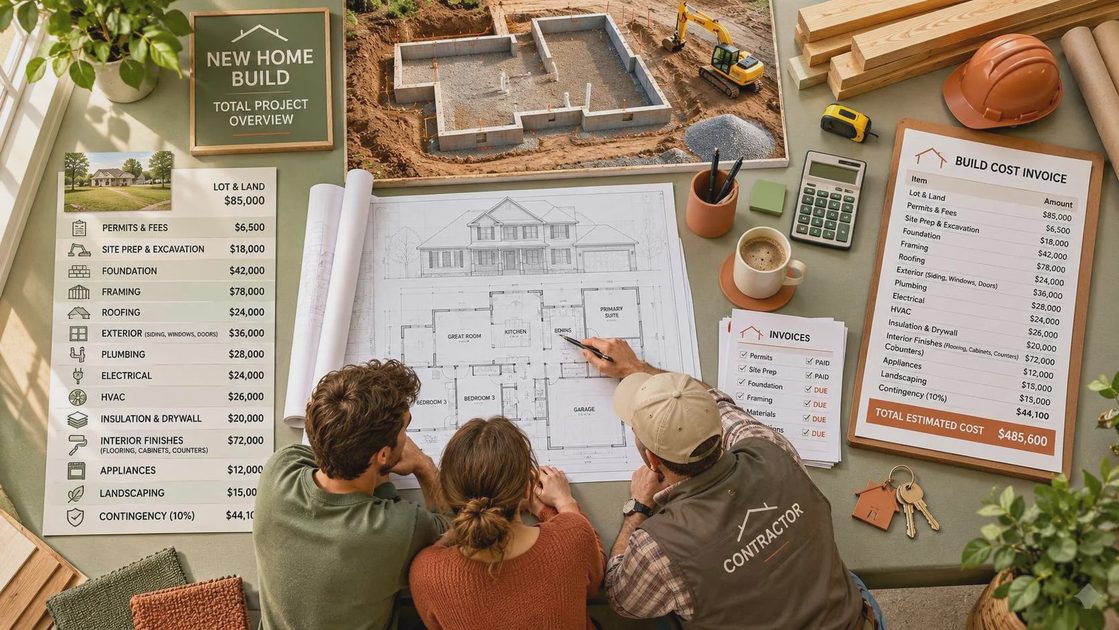
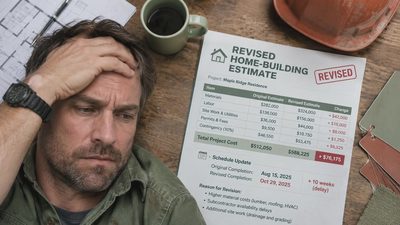
$1.2 million for construction is not necessarily $1.2 million to move in. Add a $250,000 lot, $80,000 in site and utility work, $70,000 in design and permits, and a $120,000 contingency, and the illustrative budget reaches $1.72 million before financing, landscaping, or furnishings. The true cost of building a new home depends on which of those expenses are already in the builder's number. Start there, or your spreadsheet will count the driveway twice and forget the power connection entirely.
Start with the scope, not the price per square foot
A price per square foot is useful only when you know what it buys. Ask for the construction price alongside the plans, specifications, allowances, and a written list of exclusions. Then compare that package with the lot and the finished house you expect to occupy.
A builder's figure may cover the structure and standard finishes but leave out surveying, architectural design, permits, utility connections, retaining walls, appliances, or final grading. Another proposal may include several of those items. Neither is necessarily a bad quote; comparing the totals without comparing the scope is the mistake.
Also establish how the builder measures square footage. A calculation based on conditioned living area will look different from one that includes garages, covered patios, or other nonconditioned space. Put those areas on separate lines before using the rate to compare proposals.
In the $1.72 million example above, each amount is an assumption, not a market quote. If the $1.2 million construction price already includes $30,000 of the site work, remove that $30,000 from the separate site line. The point is to account for every dollar once, not to make the total as large as possible.
Land and site work can rewrite the budget
The lot price is the starting line. Before buying, price the work required to make that particular parcel buildable: survey, soil investigation, clearing, excavation, drainage, access, and utility service. A steep site may need retaining walls or a longer driveway. Rock excavation can change the earthwork bill substantially. Neither problem cares what the kitchen allowance says.
For utilities, ask each provider what is available, where the connection point is, and what charges or off-site work may apply. A line visible across the road is not a paid connection. On a property without public service, obtain site-specific evaluations and estimates for a well and septic system before treating either as a routine expense.
Pay attention to water after the house is built, too. The grading and drainage plan should show where roof runoff and surface water go, not merely where the foundation sits. An attractive lot that directs runoff toward the house can carry a repair bill long after the landscaping crew leaves.
Allowances and changes: the true cost of building a new home
An allowance is a placeholder, not proof that your preferred selection is covered. A $20,000 appliance allowance does not buy a $30,000 appliance package without a $10,000 difference, potentially plus related installation or adjustment costs. The same arithmetic applies to lighting, plumbing fixtures, cabinets, flooring, and stone.
Ask for the quantity, quality level, and installation scope behind each allowance. A tile allowance may specify the material but not the extra labor for a complicated pattern, large-format tile, or waterproofing details. Price the selection and its associated labor together before approving it.
Changes after work begins can cost more than the visible upgrade. Moving a plumbing fixture may involve revised drawings, demolition of completed work, and replacement materials. Request an itemized change price and any schedule effect before authorizing the work. A one-line charge labeled “upgrade” belongs under Sarah's red pen.
Carry costs and contingency need their own lines
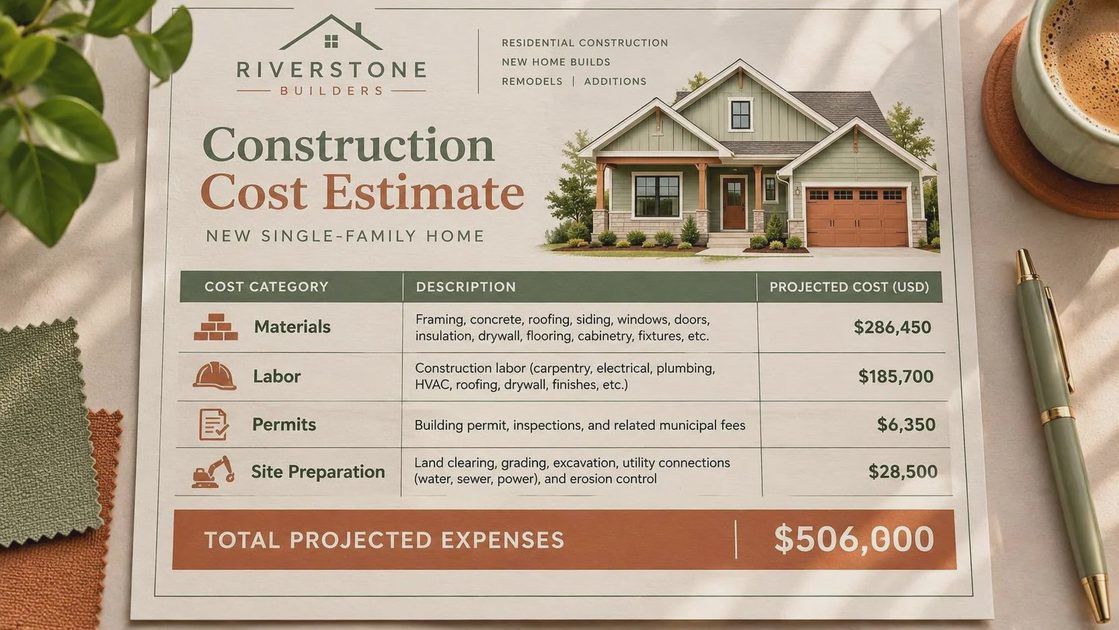
Construction financing can add interest, lender fees, appraisal charges, and other expenses. The actual carrying cost depends on the loan terms, the timing of draws, the amount outstanding, and the construction schedule. Ask the lender for an estimated draw schedule and a breakdown of charges; do not multiply the full loan balance by a year of interest and assume that is the answer.
Also include property taxes, insurance, association charges if applicable, and temporary living costs during the build. Check when each expense begins and whether it overlaps with an existing housing payment. A delay changes that math even if the builder's construction price never moves.
A contingency is money held for uncertainty, not a coupon for upgrades. In the opening example, $120,000 is 10% of the $1.2 million construction amount. That is an illustrative reserve, not a universal rule or a guarantee that surprises will stay inside it. A complicated site or incomplete design may warrant more; a well-investigated site and detailed fixed scope may justify a different amount. Keep the reserve separate from known costs and replenish the forecast when it is used.
Budget for verification and the first repairs
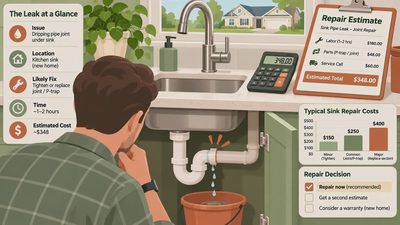
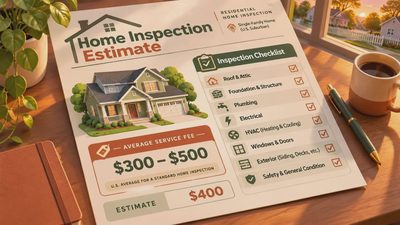
A new house can have expensive defects. Set aside money for independent inspections at useful stages, including before insulation and drywall conceal the work, and again near completion. Depending on the house and local conditions, specialist review of the foundation, roof, drainage, or mechanical systems may be worthwhile. Get fees quoted locally; inspection scope matters more than the thickness of the report.
For any observed problem, distinguish a finding from a repair price. Water staining, for example, calls for identifying the source and affected materials before assigning a remediation budget. A paint allowance is not a water-management plan. Request written repair scopes from qualified contractors and keep a separate reserve for unresolved items rather than treating the builder's promise to look at them as cash in hand.
Finally, reconcile the ledger before committing: land, construction, site work, design and permits, financing, move-in items, inspections, and contingency. Mark each line included, excluded, or still unknown, with a source for the number. The unknowns are where a clean-looking budget goes to hide its teeth.
No letters yet — pray write the first.