
The home inspection cost average is usually $400 to $800 for a standard single-family inspection, but that number is only the entry fee. On a $1 million new build, the expensive question is not whether the inspector finds defects. It is whether you know what those defects will cost before the builder's warranty clock starts running. A cracked tile, missing flashing detail, or poorly graded side yard can turn into a $15,000 repair reserve while everyone is still saying, "It's a new house."
I have priced enough construction mistakes to distrust the word new. New means the paint is fresh and the warranty paperwork is thick. It does not mean the roof drains correctly, the slab is within tolerance, or the mechanical systems were commissioned properly. Don't ask me if there is anything wrong with the house. Ask me how many dollars you have to spend to fix it.
What the home inspection cost average actually covers
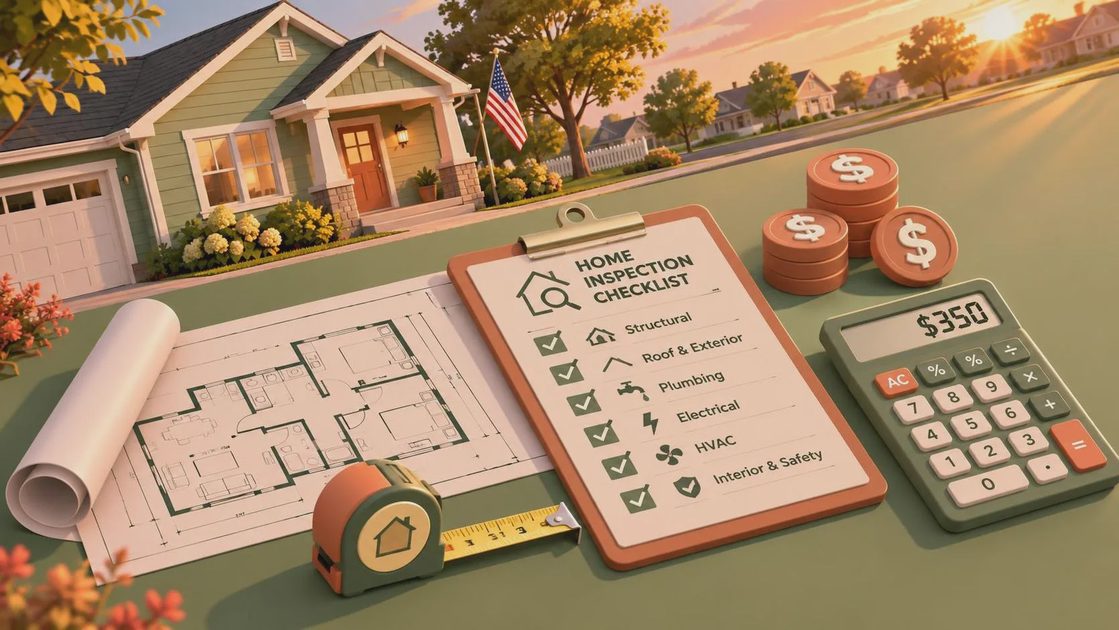
The typical home inspection cost average buys a visual, noninvasive review of accessible systems. The inspector examines the roof surface, foundation, exterior drainage, electrical panels, plumbing fixtures, heating and cooling equipment, attic areas, insulation, windows, doors, and visible finishes. A report might run 40 to 70 pages and contain dozens of photographs. That sounds comprehensive until you notice how often the language says “monitor,” “improve,” or “have a qualified contractor evaluate.”
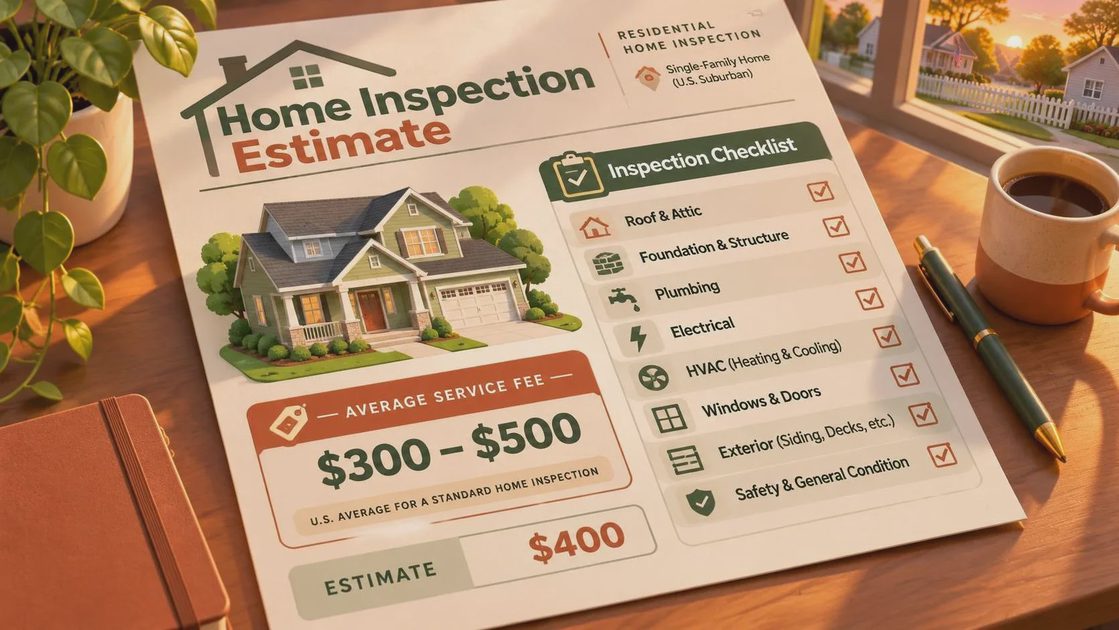
For a conventional inspection, expect roughly $300 to $600 in many markets. Large homes, steep roofs, multiple HVAC systems, crawl spaces, and detached structures can push the price toward $800 or more. A new-construction inspection often costs $400 to $900 because the inspector must review more square footage and more installed equipment. Specialty services cost extra: sewer camera work can run $150 to $350, thermal imaging $100 to $300, and a focused foundation or structural evaluation $500 to $1,500.
That home inspection cost average is reasonable when you understand its limits. It is not a forensic estimate, destructive investigation, or guarantee that concealed work is correct. Think of it as a map of suspicious territory. You still need to price the territory before you commit your money.
Why new construction deserves a different budget
New homes often hide defects behind finished drywall, flooring, cabinets, and landscaping. A standard inspection can identify a water stain or an unsealed penetration, but the report may not explain the consequence. A missing kick-out flashing detail at a roof-to-wall intersection can allow water into framing. The visible correction might cost $400. If moisture has damaged sheathing, insulation, and interior finishes, the bill can become $8,000 to $20,000.
Builder language also needs translation. “Minor settlement cracking” might mean a harmless drywall seam, or it might indicate movement that deserves monitoring with a structural engineer. “Drainage improvement recommended” could mean adding soil for $1,500, replacing a buried drain line for $6,000, or correcting a retaining-wall problem for $25,000. The home inspection cost average tells you what you paid for the inspection, not what the inspection discovered.
A new build should be inspected at several useful moments: before insulation and drywall conceal the framing, at substantial completion, and near the end of the warranty period. One visit catches different failures than another. A pre-drywall review may find missing nail plates and incomplete air sealing; a final inspection may find leaking valves, reversed outlets, failed door seals, and HVAC balancing problems.
The repair dollars behind common findings
Let us attach numbers to the findings that routinely get softened in reports. Correcting negative grading beside a foundation may cost $1,000 to $4,000, depending on access and soil volume. Replacing a failed sump pump or adding a backup system can run $800 to $2,500. Roof flashing repairs commonly land between $500 and $3,000, while a larger roof drainage correction can exceed $10,000.
HVAC defects deserve special attention in large homes. Rebalancing ducts may cost $500 to $2,000. Replacing an incorrectly sized system can cost $8,000 to $18,000 per unit, especially when new ductwork or electrical work is required. A luxury kitchen with a leaking supply line behind cabinets can produce $2,000 in immediate repairs and far more if flooring or millwork must be removed.
Cracks in tile are not always cosmetic. If the underlying substrate is improperly prepared, replacement may involve demolition, leveling compound, new tile, and baseboard repairs. A reasonable reserve could be $3,000 to $12,000 for one affected area. Structural movement is a different category entirely. A licensed engineer's evaluation might cost $600 to $1,500, with remediation ranging from $10,000 to $50,000 depending on the cause.
This is why I compare the home inspection cost average with the cost of one missed defect. Paying an additional $300 for a specialist review is cheap when it prevents a $20,000 surprise. Sarah would red-pen that calculation before I finished the sentence.
When an upgraded inspection earns its fee
An upgraded inspection makes sense when the house has complexity, expensive finishes, unusual site conditions, or visible warning signs. A $1.2 million home with three HVAC zones, a pool, retaining walls, a detached garage, and extensive stonework is not adequately represented by a basic checkbox visit. The inspection might be technically complete, but the financial exposure is not ordinary.
For a high-value property, budget $1,000 to $2,500 for a broader due-diligence review, depending on scope and region. Add targeted specialists when the evidence supports it. A structural engineer can evaluate slab movement or unusual framing. A roofer can test difficult roof areas. An HVAC technician can measure temperature differentials and static pressure instead of merely turning the thermostat on. A drainage contractor can use a camera or inspect buried discharge routes.
Do not order every test simply because a brochure lists it. Order the test that answers the expensive question. If the lot slopes toward the house, investigate drainage. If several doors bind and tile joints are cracking, investigate movement. If the attic is hot and damp, investigate ventilation and air leakage before mold becomes the headline.
How to turn the report into a repair reserve
Start by separating findings into three buckets: safety and active water intrusion, systems that are failing or improperly installed, and cosmetic or maintenance items. Price the first bucket immediately. A loose handrail is inexpensive, but an energized metal component or active roof leak deserves priority regardless of appearance.
Next, request written estimates for findings above $2,000. Give contractors photographs, measurements, and the exact location rather than forwarding a 60-page report with no explanation. Ask whether the quote includes demolition, disposal, permits, finish restoration, and testing. Those exclusions are where a $4,000 estimate becomes a $9,000 invoice.
Finally, create a 12-month and five-year reserve. The 12-month reserve covers incomplete work, failed equipment, drainage corrections, and warranty disputes. The five-year reserve captures items with a reasonable remaining-life concern, such as marginal HVAC equipment, premature seal failure, or landscape drainage that is already moving soil. The home inspection cost average is a purchase expense; the reserve is the number that protects the purchase.
The number to remember before closing
A standard inspection costing $400 to $800 is useful, but it is not the financial conclusion. For a substantial new home, a realistic due-diligence budget may be $1,000 to $3,000 when specialty reviews and follow-up pricing are included. That is a small line item beside a $1 million decision and a trivial amount beside one concealed water or structural failure.
The builder may call an issue normal. The agent may call it minor. Your spreadsheet should call it $7,500, $18,000, or unresolved until someone proves otherwise. Use the home inspection cost average as the starting point, then calculate the repair dollars hiding behind the adjectives. New is not a condition assessment. It is simply the date the problems began.

No letters yet — pray write the first.