A new house can look perfect and still hide $25,000 in drainage, roofing, framing, or mechanical corrections. If you are asking, "is my new home built correctly," you are already thinking more carefully than most buyers. Fresh paint and unused appliances prove only that the house is fresh. They do not prove that water moves away from the foundation, roof penetrations are sealed, or the framing is within tolerance.
I approach a new-build walkthrough like a cost audit, not a scavenger hunt for loose cabinet doors. The useful question is not whether the builder says an item is normal. The useful question is how much it costs to correct, how quickly the defect can spread, and whether the repair becomes harder after drywall and landscaping conceal the work.
Start outside: water is the first expensive test
The ground around the home should direct water away from the foundation, not quietly deliver it to the footing. Walk the entire perimeter after rain if possible. Look for ponding near window wells, soil that slopes toward the house, downspouts discharging beside the slab, and missing extensions at underground drainage points. A small grading correction might cost $1,500 to $4,000. Rebuilding settled soil, replacing damaged drainage, and repairing interior finishes can push the bill beyond $15,000.
Check brick or siding transitions, hose bibs, garage thresholds, and foundation penetrations. These are boring locations, which is exactly why they get ignored. A gap around a pipe may require simple sealant, while repeated moisture behind cladding can involve removal, drying, sheathing replacement, and repainting. That difference is the difference between a $200 service call and a $12,000 repair reserve.
Roof drainage deserves its own inspection. Gutters should not dump water against a wall, and flashing should be visible where roof planes meet walls, chimneys, or dormers. From the ground, binoculars are useful; from the roof, a qualified inspector with fall protection is safer. If the roof is inaccessible, request installation photographs and verify that exposed fasteners, lifted shingles, and open metal seams are addressed before closing.

Framing, floors, and walls: measure instead of admiring
A new home can have crooked framing beneath very expensive finishes. Bring a six-foot level, a tape measure, and a small flashlight. Check long walls, door openings, stair guards, and floor transitions. A wall that leans slightly may be cosmetic; a floor that varies substantially over a room can signal framing, joist, truss, or foundation issues. Tile installed over movement often cracks at grout lines first, then at the tile itself.
Ask whether floor elevations were measured before flooring installation. On a luxury home, correcting a low area after hardwood, cabinets, and stone are installed can cost $8,000 to $30,000 because several trades must be removed and returned. A builder may describe the condition as "within industry tolerance," but that phrase needs a measurement attached. Tolerance for a covered finish is not the same as acceptable performance for a door, shower, or large-format tile installation.
Inspect every window and exterior door for square operation, consistent reveals, and evidence of water intrusion. Open and latch them all. A difficult lock may be a simple adjustment, but multiple sticking openings on one elevation deserve further investigation. Replacement windows can run $800 to $2,500 each before interior trim and exterior repairs. Do not let a punch-list label turn a measurable defect into a future homeowner expense.
Mechanical systems must work together
Test heating, cooling, ventilation, plumbing, and electrical systems under realistic use. Run several faucets while flushing toilets. Watch for pressure changes, slow drains, hammering pipes, or hot water that arrives inconsistently. A single poorly supported supply line may cost $300 to secure. A concealed leak behind cabinets or finished walls can create a five-figure restoration bill.
For HVAC, record supply and return temperatures, inspect filter access, and confirm that every room receives usable airflow. An oversized system can cycle rapidly, leave humidity behind, and wear out sooner. Poorly sealed ducts in an attic or crawlspace waste conditioned air and can cost $1,500 to $6,000 to seal and balance. Ask for commissioning documents, equipment model numbers, and warranty registration rather than accepting a thermostat that simply turns on.
Electrical checks should include the panel, labeled circuits, GFCI protection in wet areas, AFCI protection where required, exterior outlets, garage outlets, smoke alarms, and carbon monoxide alarms. A missing outlet cover is trivial. An unlabeled panel or improperly protected circuit is not. Correction costs vary from a few hundred dollars to several thousand when access through finished ceilings is required.
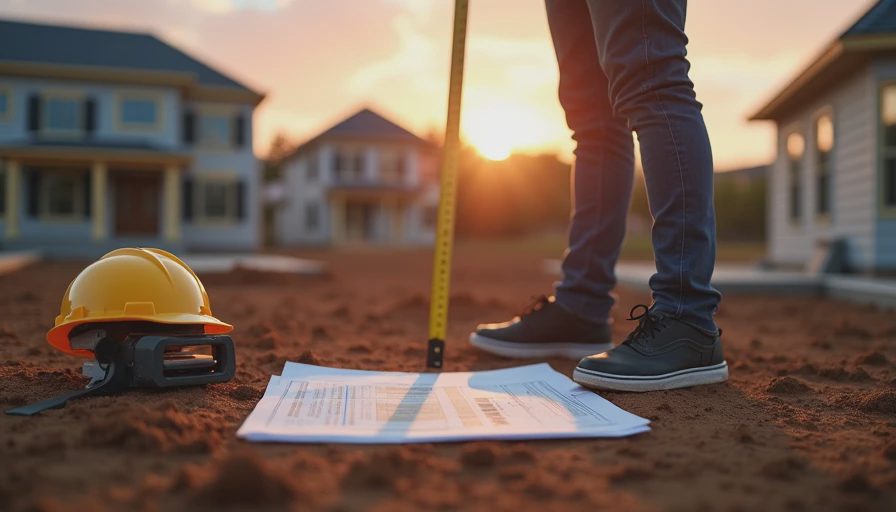
How to decide if my new home built correctly has enough evidence
The phrase "is my new home built correctly" cannot be answered by a clean punch list. You need evidence from several stages of construction. Request the approved plans, structural drawings, energy documents, site drainage plan, truss package, equipment schedules, and inspection records available for the project. Compare installed conditions with those documents. A roof overhang, beam, window, or drain location that differs from the drawing deserves a written explanation and field verification.
Photographs taken before insulation and drywall are particularly valuable. They can show plumbing routes, electrical runs, blocking, insulation coverage, shower waterproofing, and flashing. Photos do not replace direct inspection, but they make concealed conditions less dependent on memory or builder reassurance. Organize them by room and date; Sarah would put them in a spreadsheet, and she would be right.
Bring specialists when the risk justifies the fee. A standard inspector may identify visible concerns, while a structural engineer, roofing contractor, HVAC technician, or envelope consultant can answer a narrower and more expensive question. Spending $1,500 to $4,000 on targeted due diligence is small beside an avoidable $40,000 opening of walls, ceilings, or exterior cladding.
Turn defects into a repair budget
Every finding needs four entries: location, observed condition, likely cause, and probable correction cost. Add access, demolition, disposal, permits, finish replacement, and independent verification. A $1,000 plumbing repair inside an unfinished utility room is not the same as a $1,000 repair beneath imported stone tile.
Use practical ranges. Minor caulking, adjustment, and labeling items may total $500 to $2,000. Drainage or grading corrections commonly land between $3,000 and $15,000, depending on access and soil movement. Roof or envelope repairs can range from $2,500 for localized flashing work to $25,000 or more when sheathing and interior finishes are involved. These are planning numbers, not a substitute for bids, but they prevent a builder's friendly $300 allowance from swallowing a $9,000 reality.
If the answer to is my new home built correctly depends on ten unresolved items, do not treat those items as one vague punch-list line. Separate them, photograph them, and assign a dollar range. A house with twelve $150 adjustments is different from one with three concealed moisture risks, even if both reports contain twelve entries.
The final walkthrough is not the first inspection
Schedule an inspection before insulation, another before drywall when access is available, and a final inspection before closing. At each stage, verify that prior corrections were actually completed. Use blue tape for visible defects, but document concealed concerns in writing with photographs and measurements. Test appliances, garage doors, irrigation controls, fireplaces, water heaters, backup systems, and every installed light fixture.
Do not wait for the warranty period to discover missing flashing or inadequate drainage. Warranty service is useful for legitimate defects, but it is a poor substitute for leverage before finishes are accepted. The goal is not to create a dramatic report. It is to avoid buying a seven-figure collection of covered-up assumptions.
So, is my new home built correctly? You can get close to a defensible answer by measuring, reviewing construction evidence, testing systems, and pricing the repairs honestly. Do not ask whether anything is wrong. Ask how many dollars you have to spend to fix it, who should correct it, and whether the work is still accessible today.


No letters yet — pray write the first.