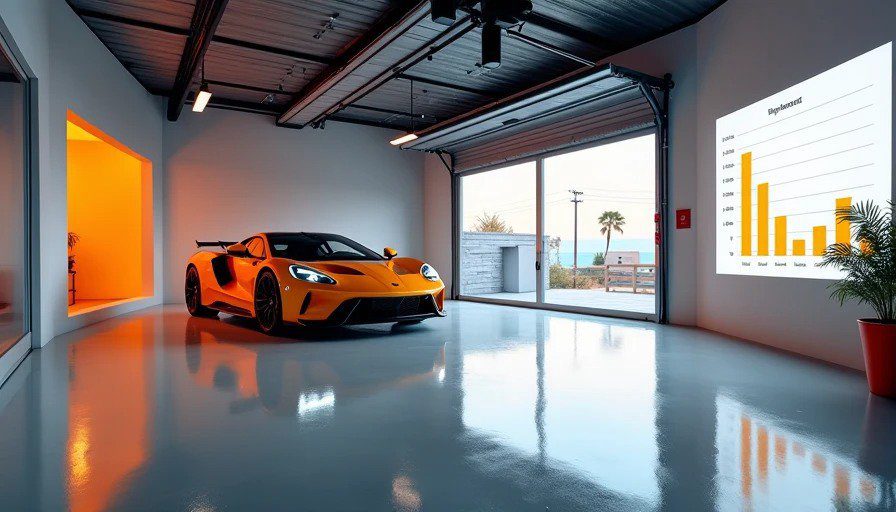
The options sheet includes “Premium Epoxy Garage Floor Coating – $4,500 upgrade.” Marketing photos show a showroom-like surface that’s easy to clean, chemical resistant, and dramatically better than bare concrete. Many buyers add it thinking it’s a worthwhile investment in their new home. The reality is more complicated, and the math often doesn’t support the premium.
As someone who prices construction realities for a living, I’ve seen too many of these upgrades fail to deliver the promised longevity, especially in Texas heat, oil spills, and vehicle traffic. Here’s the detailed ledger breakdown.
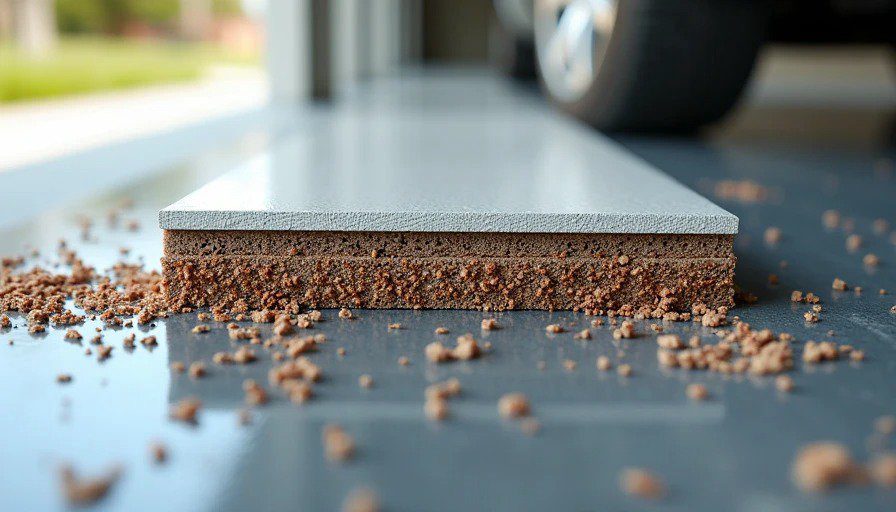
Breaking Down the $4,500 Upgrade
What the Builder Typically Provides:
Basic surface prep (often grinding or etching).
Two-part epoxy coating, sometimes with color flakes.
Top coat sealer.
Labor included in the package.
Market Cost for Quality Work:
Professional independent installers charge $3–$8 per sq ft for high-quality systems with proper prep, multiple coats, and UV-stable topcoats. For a typical 400–600 sq ft garage, $4,500 is on the higher end, reflecting builder markup and convenience.
Key Variables Affecting Performance:
Surface preparation quality (critical and often rushed).
Coating thickness and number of coats.
UV resistance (Texas sun degrades many epoxies quickly).
Flexibility to handle concrete movement.
Flake density and topcoat durability.
The Real-World Durability Math in Texas
Garage floors face hot tires, oil drips, gasoline, road salt in winter (occasional), and thermal expansion/contraction. Many builder-grade epoxy systems:
Yellow and fade within 2–4 years due to UV exposure.
Chip or peel at hot tire areas.
Lose gloss and become harder to clean.
Require recoating every 5–8 years.
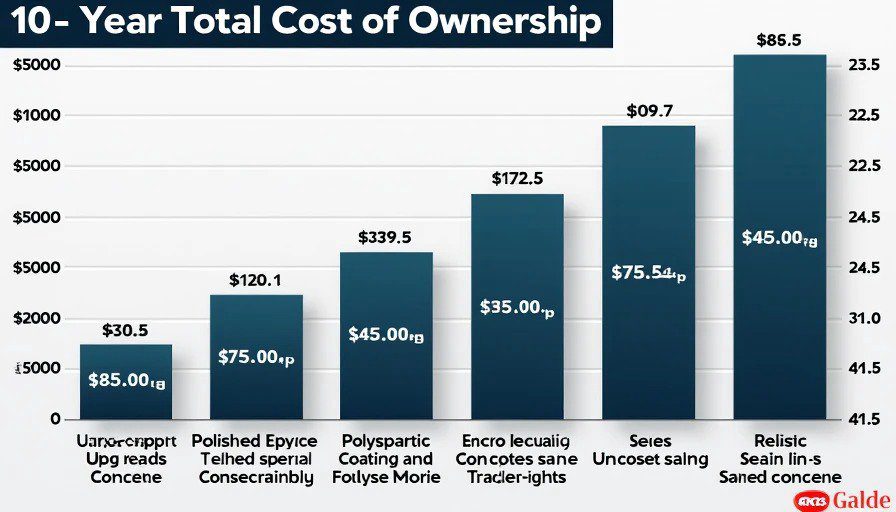
Cost of Ownership Projection (Typical 500 sq ft garage):
Upfront: $4,500
Maintenance and touch-ups over 10 years: $1,200–$2,800
Full recoat at year 6–8: $3,000–$4,500
Total 10-year cost: $8,500–$11,500+
Alternatives Comparison:
High-quality polyurea or polyaspartic coatings: Better UV and chemical resistance, higher upfront but longer life.
Polished concrete: Lower maintenance, industrial look, $2,000–$4,000.
Basic sealed concrete with mats in high-wear areas: Cheapest long-term for many users.
Interlocking tiles or mats: Removable, customizable, $1,500–$3,000.
The epoxy upgrade often has the worst bang-for-buck when full lifecycle costs are considered.
Why the Math Is Worse Than You Think
Hidden Performance Issues:
Poor prep leads to delamination.
Thin coatings wear through in tire paths.
UV degradation turns the “showroom floor” dull and blotchy.
Concrete moisture vapor transmission causes bubbling if not addressed.
Opportunity Cost:
$4,500 could fund meaningful upgrades elsewhere with better returns (windows, HVAC, insulation).
Resale value boost from epoxy is minimal compared to marketing hype — buyers expect functional garages, not necessarily glossy ones.
Texas-Specific Challenges:
Extreme heat accelerates curing issues and degradation.
Vehicle fluids and heat from engines stress the coating.
Seasonal expansion increases cracking risk if the system isn’t flexible enough.
In audits, I routinely reduce the perceived value of builder epoxy packages and recommend alternatives or negotiation for better systems if the buyer wants a coated floor.
When Epoxy Might Still Make Sense
You want the specific aesthetic and are willing to maintain or recoat.
Professional-grade system with proper prep and UV-resistant materials (often costs more than builder package).
Short-term ownership where initial wow factor matters more than longevity.
Even then, shop independent installers for better quality at similar or lower price.
Better Approaches for Your Garage Floor
Negotiate or Decline: Use the audit to push back on the $4,500 or remove it for credit.
Targeted Protection: Use high-quality floor mats or coatings only in high-wear zones.
Polished or Sealed Concrete: Durable, low maintenance, modern look.
Modular Systems: Easy to repair and replace sections.
The goal is a functional, durable surface that doesn’t become a maintenance headache or money pit.
The Upgrade Verdict
The $4,500 garage epoxy upgrade is rarely worth it when you run the full math. Builder convenience and markup combined with real-world performance in Texas conditions make the payback poor and the long-term costs higher than expected. Better alternatives exist that deliver more value for less or similar money.
Always break down big-ticket upgrades like this one. The glossy photos sell the dream. The ledger reveals the reality. Make your garage floor decision based on numbers, not marketing — your future self (and your bank account) will thank you.

No letters yet — pray write the first.