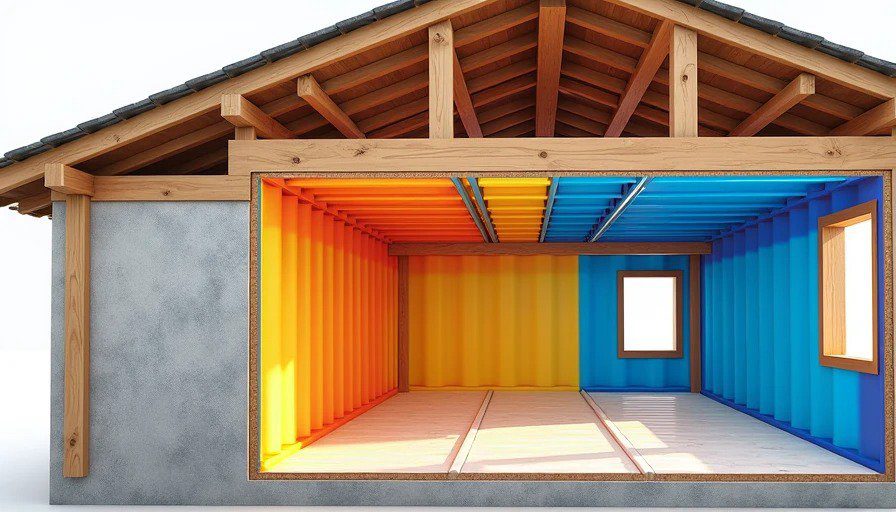
The options sheet lists “Spray Foam Insulation Upgrade – $8,000.” The sales rep emphasizes superior air sealing, higher R-value, and reduced energy bills. Your HVAC contractor nods enthusiastically. But is it actually worth $8,000 more than standard batt or blown-in insulation?
I run these numbers for clients weekly. My background pricing commercial and residential systems means I don’t trust marketing claims — I model them against local utility rates, climate data, and real-world performance degradation over time. Here’s the transparent ledger on spray foam for Austin-area new homes.
Understanding the Insulation Options
Standard Batt or Blown-In
Fiberglass or cellulose installed between studs and joists.
R-values typically R-38 attic, R-13 to R-19 walls.
Air sealing relies on careful installation and additional caulking.
Upfront cheaper. Vulnerable to compression, settling, and gaps over time.
Closed-Cell Spray Foam
Expands to fill cavities completely, creating a continuous air and vapor barrier.
Higher effective R-value per inch (around R-6.5–7).
Adds structural rigidity and moisture resistance.
Significantly better air sealing, reducing infiltration which accounts for 30–40% of energy loss in many homes.
Open-cell foam is cheaper but less effective as a vapor barrier. I focus on closed-cell for most Texas applications due to humidity management.
Running the Actual Payback Numbers for Central Texas
Austin climate: hot summers, mild winters, high cooling demand. Average electricity rate around $0.13–$0.16/kWh. Let’s model a typical 2,800 sq ft new build.
Assumptions (Conservative and Transparent):
Annual energy bill baseline with code-minimum insulation: $2,800–$3,400 cooling/heating dominant.
Spray foam improvement: 15–25% reduction in energy use (real studies and local data show 20% average in sealed homes).
Incremental cost: $8,000 (common builder premium after their markup).
Home lifespan considered: 10-year and 20-year horizons.
Maintenance factor: Spray foam holds performance better; batt can lose 10–20% efficiency over time due to settling.
Yearly Savings Calculation:
20% reduction on $3,100 average bill = $620 annual savings.
After minor degradation and rate increases: realistic $450–$550/year net.
Payback Period:
Simple payback: $8,000 / $500 = 16 years.
With time value of money and potential rate hikes: closer to 12–14 years for break-even.
That’s not terrible, but it’s not the instant winner many sales reps claim. The real value comes from non-energy benefits.
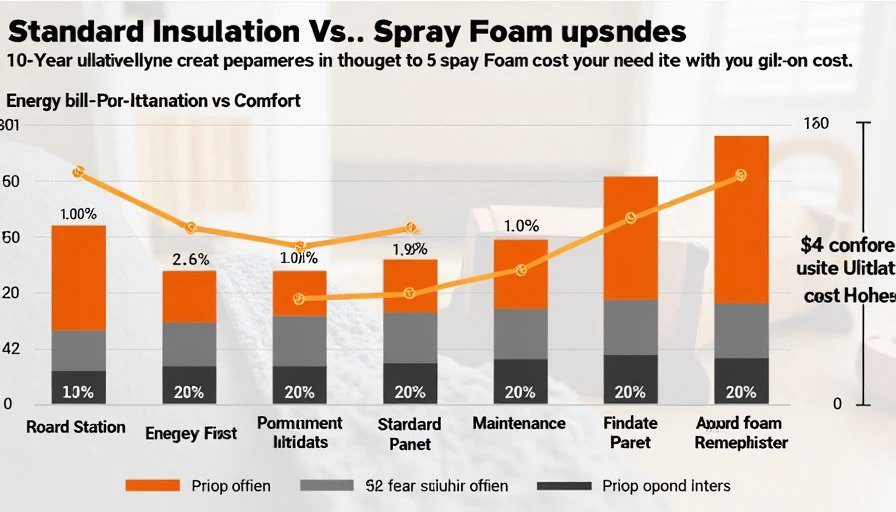
Non-Energy Benefits That Tilt the Scale
Energy savings alone make spray foam a break-even to modest win over 15+ years. Other factors often justify the premium:
Comfort and Humidity Control
Spray foam reduces hot/cold spots and manages humidity better in Texas summers. Fewer comfort complaints, potentially lower thermostat settings (saving more energy indirectly).
Durability and Pest Resistance
Closed-cell foam doesn’t settle or compress. It discourages rodents and insects. In attics, it can reduce duct leakage dramatically when ducts are encapsulated.
Structural and Moisture Advantages
Adds wall strength. Excellent vapor barrier properties reduce condensation risk in humid climates — potentially avoiding hidden mold issues that cost tens of thousands to remediate.
Resale and Appraisal
Energy-efficient homes can command premiums. Appraisers and buyers increasingly value verified high-performance envelopes, especially with rising utility costs.
Downsides to Consider
Higher upfront cost.
Installation requires experienced crews — poor application can trap moisture or create off-gassing issues (rare with quality closed-cell).
Harder to modify later for electrical or plumbing changes.
Potential overkill in some well-sealed designs with good air barriers.
My Recommendation Framework for Clients
For most $1M+ new builds in Central Texas I audit:
Worth It If: You plan to stay 10+ years, value comfort, or have complex architecture with many penetrations where air sealing is difficult.
Skip or Negotiate If: Tight budget, simple rectangular home with good conventional detailing, or you prioritize other upgrades like windows or HVAC.
Hybrid Approach: Spray foam on roof deck/attic and high-performance batt or dense-pack in walls — often optimal cost-benefit.
Realistic 5-year repair reserve adjustment: Spray foam typically lowers envelope-related line items by $1,500–$3,000 due to better performance.
Broader Upgrade Math Lessons
This spray foam example illustrates my core approach: Never take the builder’s word on “worth it.” Model the total cost of ownership — upfront, operating, maintenance, and resale.
Similar analyses on windows, HVAC sizing, and roofing show the same pattern. Premium options pay back when they address real performance gaps rather than just marketing checkboxes. In Texas heat, air sealing often delivers more bang than raw R-value alone.
Sarah runs these spreadsheets with me and always emphasizes lifecycle costing over first-cost thinking. Liam would rather spend the $8,000 on truck accessories, but even he understands that a comfortable house without massive utility bills makes weekends at the river more enjoyable.
Final Numbers Verdict
An $8,000 spray foam upgrade is often worth it for long-term owners in Texas — but primarily for comfort, durability, and moisture control rather than pure energy payback. Expect 12–18 year simple payback on energy with significant non-quantifiable benefits that improve daily living and reduce risk.
Don’t pay the builder’s asking price without shopping the number. Competitive bids from insulation contractors can sometimes reduce the premium by 20–30%. Use the data to negotiate or confirm the value.
Every upgrade decision in a new build should come down to transparent math, not glossy brochures. Spray foam can be a smart investment when the numbers — and your ownership timeline — support it. Run your own scenario with local rates and make the informed call.
Your new home’s envelope sets the tone for decades of performance. Spend the $8,000 wisely, or invest it elsewhere with better returns. The ledger doesn’t lie.





No letters yet — pray write the first.