
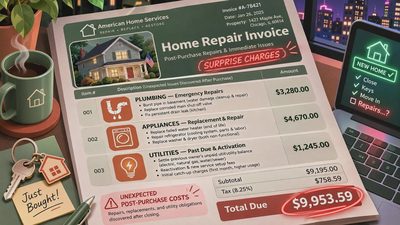
A $1.2 million new home can still hide $30,000 in work. That is the first fact to put on the table in any home inspection cost breakdown. “Brand new” describes the age of the drywall, not the quality of the drainage, flashing, electrical installation, or HVAC commissioning. I have walked houses with fresh paint, stainless appliances, and roof leaks already working their way into the sheathing. The brochure looked expensive. The repair reserve looked nonexistent.
The standard inspection fee is usually the smallest number in the transaction. A general inspection often runs about $400 to $900 for a typical house, while a large luxury property can cost $900 to $1,800 because it takes more time and has more systems. Add sewer scope, infrared scanning, pool inspection, septic review, structural engineering, or a separate HVAC assessment, and the due-diligence bill can reach $2,000 to $5,000. That sounds painful until you compare it with a single concealed drainage failure.
What the inspection fee actually buys
A general inspector is buying you time and observation. The inspector checks visible components, operates representative fixtures, looks at the roof from accessible areas, tests outlets, examines the electrical panel, and documents conditions with photographs. A competent report can identify missing GFCI protection, improper grading, loose handrails, incomplete insulation, failed window seals, or water staining.
That service is valuable, but it is not a repair estimate and it is not a guarantee. The report may say “further evaluation recommended” when the real question is whether the issue costs $600 or $60,000. A loose toilet flange and a slab movement problem can occupy similar space in a PDF. They do not occupy similar space in your bank account.
For a high-end new build, I usually separate the work into three layers. First comes the general inspection. Second comes targeted testing based on the house: sewer scope, pool equipment, retaining walls, attic moisture, or structural review. Third comes cost validation, where each meaningful defect receives a likely repair method, access assumption, labor allowance, material allowance, and contingency. That last layer is what turns a pile of observations into a usable budget.

The major cost categories hiding behind the report
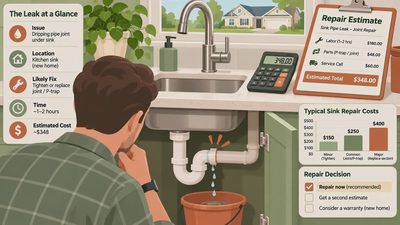
The most common expensive category is water management. Negative grading, short downspouts, missing kick-out flashing, poorly sealed penetrations, and balcony drainage can create repair budgets from $2,000 to $15,000. If water has reached framing, insulation, drywall, or flooring, the range can move to $15,000 to $40,000. A basement or hillside property can go higher because excavation and structural access are not friendly trades.
HVAC defects are another frequent surprise. A system that runs is not necessarily a system that works correctly. Poor duct sealing, inadequate return air, incorrect refrigerant charge, blocked condensate drainage, and weak balancing can produce $1,500 to $8,000 in corrective work. Replacing a failed variable-speed air handler or repairing inaccessible ductwork can push the bill beyond $12,000.
Roof and exterior envelope corrections often look cosmetic until they are not. Missing sealant, exposed fasteners, cracked masonry, incomplete flashing, and damaged siding may total $1,000 to $7,500 when caught early. Once the contractor must remove cladding, replace wet sheathing, and rebuild a section of the wall, $10,000 to $30,000 is a more credible reserve.
A practical home inspection cost breakdown by severity
A useful budget sorts findings into immediate, near-term, and watch-list work. Immediate work affects safety, active water intrusion, structural performance, or major equipment operation. Examples include an unsupported beam connection, a live electrical hazard, standing water at the foundation, or a furnace venting defect. A realistic immediate reserve might be $5,000 to $25,000 depending on access and scope.
Near-term work is not necessarily dangerous today, but delaying it increases cost. Think of failed caulk joints, unsealed roof penetrations, a sloping patio that drains toward the wall, or an attic with missing insulation. Reserve $2,000 to $12,000 for this group. A watch-list item is a minor crack, stiff door, or small grading imperfection that needs measurement and documentation rather than a dramatic contractor parade.
The mistake is adding every reported item together without considering scope. Ten small drywall cracks might cost $1,500 to repair and repaint. One recurring crack tied to movement could require an engineer, monitoring, and structural correction. The count of observations matters less than the mechanism behind them.

Where new construction commonly loses money
Builders work through schedules, subcontractors, inspections, and closeout lists. That system can produce a house that is technically complete but not fully commissioned. Doors get adjusted before settlement stabilizes. Touch-up paint hides patched drywall. Mechanical systems are installed by one crew, started by another, and balanced by nobody who owns the final result.
The expensive pattern is not always poor workmanship. It is incomplete coordination. A countertop installer cuts around an outlet, the electrician relocates it, and the backsplash crew leaves an unsealed penetration. A landscaper raises soil against siding. A roofer installs flashing, but the adjacent stucco contractor covers the drainage path. Each trade can claim its portion is finished while the wall assembly quietly collects water.
Ask for evidence, not reassurance. Request startup records for HVAC equipment, roof warranty documentation, grading plans, drainage photographs, and any punch-list closeout records. Photograph concealed conditions before closing when access is available. A builder representative saying “that is standard” is not a test result, a measurement, or a repair allowance.
How to build a defensible repair reserve
Start with the finding, then write the repair sequence in plain English. “Water at rear elevation” is not a budget line. “Remove 40 square feet of siding, correct missing flashing, replace wet sheathing, install new weather barrier, reinstall siding, and repaint” is a budget line. The second description reveals labor, materials, disposal, access, and likely contingency.
For each item, obtain one qualified contractor opinion when the scope is straightforward and two when the defect is structural, concealed, or likely to become a negotiation point. Add access costs. A roof repair over a two-story foyer is not priced like one over a garage. A drain repair beneath finished stone is not priced like one in exposed soil. Include permits where applicable and carry a 15% to 25% contingency for concealed conditions on invasive repairs.
This home inspection cost breakdown approach also prevents false savings. A $3,000 drainage correction may avoid a $25,000 interior remediation. A $1,200 infrared scan may reveal missing insulation before a winter of condensation damages the ceiling. The cheapest inspection is rarely the cheapest decision.
The numbers I would want before signing
For a conventional new home with no major red flags, I would want the inspection fee, targeted testing, and an initial repair reserve clearly separated. That might mean $1,000 for the general inspection, $500 for a sewer scope, and $5,000 to $10,000 held for ordinary corrections. A complex luxury home with retaining walls, a pool, expansive glazing, and difficult site drainage deserves a larger investigation budget and perhaps a $20,000 to $50,000 reserve until specialists reduce the uncertainty.
The final home inspection cost breakdown should identify confirmed defects, probable defects, and unknowns requiring access. It should also state what has not been inspected. An inaccessible crawlspace is not a clean crawlspace. Unopened attic insulation is not proof that the roof assembly is dry. A recently painted ceiling is not evidence that the leak is repaired.
Do not ask whether anything is wrong with the house. Ask how many dollars you have to spend to make it right, how soon those dollars are needed, and what evidence supports the number. That is the difference between collecting a report and performing due diligence. A new address deserves a fresh inspection. Your repair reserve deserves a red pen.


No letters yet — pray write the first.