A $1.2 million new home can carry a $40,000 repair reserve before you have moved in. That is the practical consequence of builder shortcuts new construction buyers often discover only after the warranty period starts. “New” tells you the age of the drywall. It does not tell you whether the drainage, flashing, grading, or mechanical installation was done correctly. Do not ask me if there is anything wrong with this house. Ask me how many dollars you have to spend to fix it.
Where the shortcuts hide
Most builder shortcuts new construction projects use are not dramatic. Nobody leaves a foundation wall visibly leaning in the living room. The shortcuts are buried in sequencing, omitted details, thin material selections, and work completed too quickly for proper verification. A crew skips a piece of flashing above a window. A subcontractor backfills before taking photographs. An HVAC installer leaves a flexible duct sharply bent behind the ceiling. Each decision saves minutes or a few hundred dollars. The buyer inherits the repair.
The first place I look is water management. Walk the exterior after rain if possible. Downspouts should discharge away from the foundation, soil should slope away from the walls, and siding or stucco should not terminate inches above finished grade. A missing kick-out flashing detail can push roof runoff behind siding and into wall framing. Correcting one small area might cost $1,500 to $4,000. Replacing wet sheathing, insulation, drywall, and interior finishes across a wall can reach $12,000 to $25,000.

A standard walkthrough often records “minor grading concern” and moves on. My spreadsheet records the likely consequence: standing water, soil movement, settlement at the patio, and a reserve for correction. Builder shortcuts new construction buyers should worry about are the ones that look inexpensive today but create access problems tomorrow. A blocked cleanout behind finished cabinetry is not a cosmetic defect. It can turn a routine drain service into a $2,000 demolition job.
The five-dollar detail that becomes a five-figure repair
One recurring example is missing or poorly installed window flashing. The window may open smoothly, the glass may be clear, and the trim may look perfect during the walk. The failure appears months later as bubbling paint, swollen flooring, or a stained ceiling below the opening. Removing siding, testing the opening, installing proper flashing, and rebuilding interior finishes commonly creates a $3,000 to $10,000 scope for one window group.
Another is inadequate attic ventilation. A builder may install vents but fail to create a continuous air path from soffit to ridge. The result is trapped heat and moisture, especially in climates with hot summers or humid winters. The immediate inspection may show only warm insulation and a few darkened roof-deck areas. The longer repair can involve mold treatment, insulation removal, roof-deck replacement, and ventilation changes. A sensible reserve is often $8,000 to $18,000, depending on access and damage.
Electrical shortcuts deserve the same skepticism. Loose connections, missing support, overcrowded panels, and unprotected wiring near plumbing are not matters for a casual checkbox. Ask the inspector to open accessible panels, verify conductor sizing, and identify circuits that do not match the labeled breakers. A straightforward correction might cost $500. Reworking several circuits after drywall is complete can cost $5,000 to $15,000.
How to turn an inspection into a cost audit
Builder shortcuts new construction inspections become useful only when every observation is tied to a scope of work. Start with the location, cause, consequence, and access requirement. “Cracked grout at shower corner” is an observation. “Likely movement or failed waterproofing; remove tile at the corner, test the membrane, rebuild affected area; budget $2,500 to $7,500” is a cost decision.
I divide findings into three levels. Immediate safety or water risks belong in the first group. These include missing handrails, active leaks, exposed conductors, failed gas venting, and structural movement. The second group includes defects that will become expensive when concealed finishes fail, such as unsealed penetrations, poor roof-to-wall transitions, and inaccessible valves. The third group covers maintenance and finish items: doors that rub, uneven paint, loose cabinet hardware, and cracked caulk. They still matter, but they should not compete with a wet wall for attention.
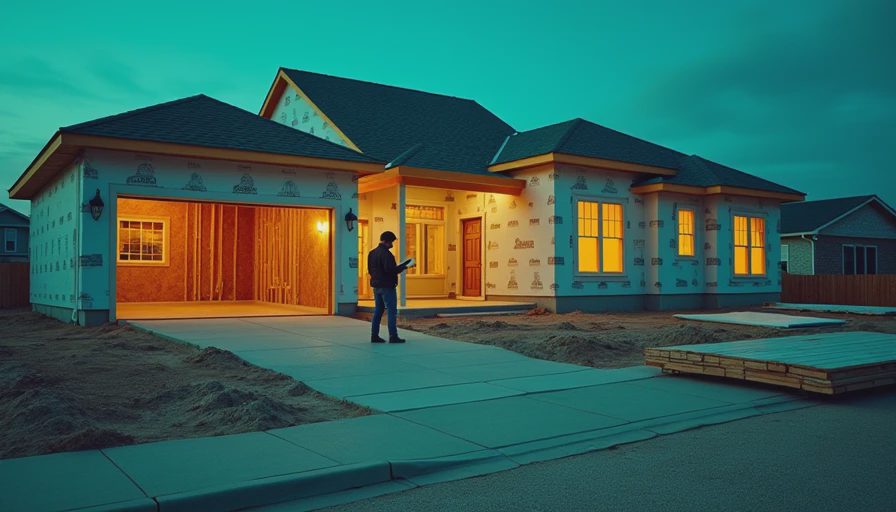
For each major issue, request evidence rather than reassurance. Ask for photographs before insulation and drywall, pressure-test records for plumbing, duct-leakage results, waterproofing details, and the final grading plan. Builder shortcuts new construction work are easier to challenge when the missing step is documented. If records do not exist, price the uncertainty instead of pretending it is harmless.
What a realistic repair reserve looks like
A $1 million-plus house deserves a reserve that reflects its complexity, not a token punch-list allowance. For a relatively clean property, I might carry $5,000 to $12,000 for corrections discovered during due diligence. A home with drainage concerns, incomplete attic work, questionable tile waterproofing, and mechanical access problems can justify $25,000 to $60,000. That is not a prediction that every dollar will be spent. It is a recognition that premium finishes make ordinary repairs more expensive.
Consider a hypothetical 4,000-square-foot house. The inspection identifies negative grading along one elevation, two questionable window transitions, an inaccessible main water shutoff, and an attic with compressed insulation. The repair math could read $9,000 for grading and drainage, $6,000 for window corrections, $1,500 for access work, and $7,500 for insulation and ventilation improvements. Add testing, project management, and a contingency, and the reserve approaches $30,000 quickly. Sarah would circle the optimistic column in red ink, and she would be right.
Builder shortcuts new construction buyers often accept because the builder offers a warranty. A warranty is useful, but it does not eliminate the need to identify the defect, document the cause, and define the requested correction. “We will monitor it” is not a repair scope. Ask what measurement triggers action, who performs the work, and how concealed materials will be inspected after opening.
Questions to ask before signing off
Ask which subcontractor installed each critical system and whether the work was independently tested. Ask whether the roof, shower pans, balconies, retaining walls, and below-grade waterproofing were photographed before concealment. Ask where the shutoffs, cleanouts, condensate lines, and service panels are located. If a technician cannot reach a component without removing finished millwork, the design has a future cost attached.
Also ask what is excluded from the advertised specification. A low-cost attic hatch, limited insulation at a garage wall, or missing exterior sealant may not violate the sales brochure, but each can affect comfort and durability. Builder shortcuts new construction contracts and specifications often become visible only by comparing the drawings, selections, and finished work line by line. I am not your attorney, and I do not interpret contract rights. I do quantify the physical gap between what was planned and what was installed.
The buyer’s final field procedure
Schedule the detailed inspection before the final walkthrough, then return after corrections are supposedly complete. Bring a flashlight, outlet tester, moisture meter, camera, and a copy of the plans. Run every fixture long enough to expose slow drains. Test windows, doors, fans, garage doors, exterior receptacles, and irrigation zones. Look at the ceiling below bathrooms and around every roof penetration. Walk the lot perimeter and trace every downspout to its discharge point.
Photograph each defect with a scale, label the room, and assign a probable repair range. Separate a $200 adjustment from a $20,000 investigation so the serious findings cannot be buried under a long list of paint touch-ups. Builder shortcuts new construction become manageable when the evidence is organized, the dollars are visible, and the correction has a defined endpoint. Spend the money on a forensic review before closing, not on a surprise demolition after the moving truck arrives.


No letters yet — pray write the first.