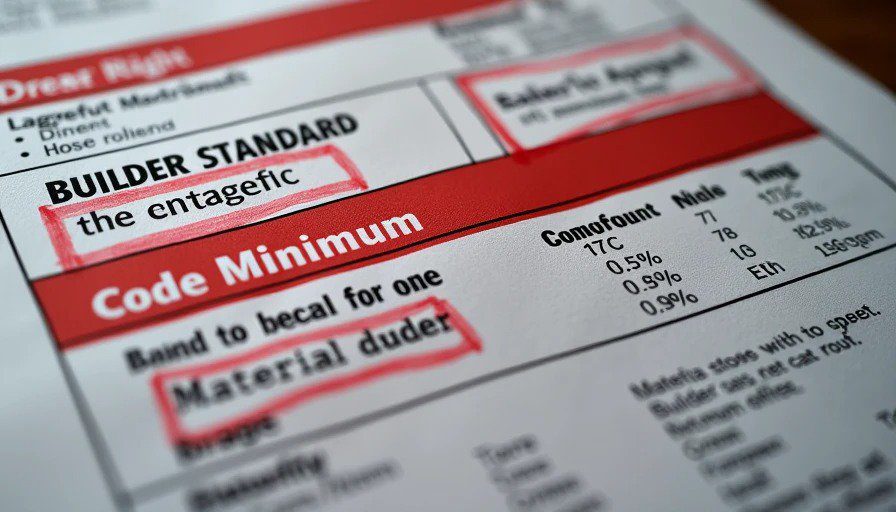
Builder specification sheets list hundreds of line items. Most buyers skim them. I read them like a forensic report because certain phrases reliably predict shortcuts that show up in my cost audits as repair items years later. Here are six spec-line red flags that mean corners are being cut.

1. "Builder Standard" or "Equivalent To"
This catch-all phrase gives the builder wide latitude for substitutions. It often means the cheapest option that technically meets the description. Watch for it on finishes, fixtures, and mechanical components. The “equivalent” is rarely equal in durability or performance.
Hidden Cost: Faster wear, more maintenance, lower resale appeal. Add $3,000–$8,000 to reserves for accelerated replacements.
2. "Code Minimum" on Critical Systems
Appears on insulation, HVAC sizing, foundation reinforcement, or envelope details. Code is the floor, not the target for a premium home. In Texas soils and climate, minimum often leads to movement, inefficiency, or moisture issues.
Hidden Cost: Higher energy bills and structural repairs. Frequently $10,000+ over five years.
3. Allowance Amounts That Are Unrealistically Low
Flooring, countertops, lighting, or appliances with allowances well below market for the stated grade. This sets up change order profits or forces buyers into builder-grade selections.
Hidden Cost: Surprise overages or living with subpar finishes. See earlier analyses for $10k+ gaps.
4. "Standard Grade" or "Builder Grade" on Visible Finishes
Tile, paint, carpet, hardware, lighting. Builder grade prioritizes cost and speed over longevity and aesthetics. It looks okay on day one but shows wear quickly.
Hidden Cost: Earlier replacement cycles and dissatisfaction. $5,000–$15,000 in cosmetic upgrades over time.
5. Vague or Absent Details on Envelope and Moisture Management
Limited specifics on flashing, housewrap integration, window installation methods, or drainage. “Per manufacturer instructions” without further detail often means minimal effort.
Hidden Cost: Water intrusion repairs — one of the most expensive categories, easily $15,000–$40,000 if widespread.
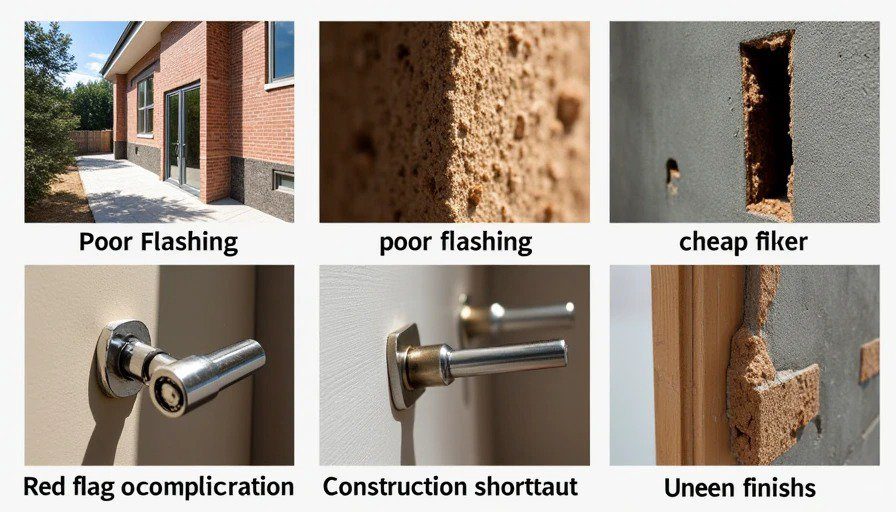
6. Limited or No Third-Party Verification Requirements
Phrases that rely solely on builder or subcontractor self-inspection for critical items like foundation testing, duct leakage, or pressure testing. Lack of independent verification language.
Hidden Cost: Undetected defects that surface after warranty. Increases overall reserve needs significantly.
How These Red Flags Compound
Individually, each might seem minor. Together, they create a home that meets minimum standards but underperforms in comfort, efficiency, and durability. My 5-year reserve models routinely increase by 20–40% when multiple red flags appear in the specs.
Negotiation and Protection Strategies
Request clarifications and upgrades on flagged items before signing.
Specify brands, grades, and performance metrics where possible.
Insist on third-party testing and documentation for key systems.
Use the audit process to quantify impacts and negotiate credits.
Builders respond to informed buyers. Data from a professional review carries weight.
The Pattern Recognition Advantage
After auditing dozens of projects, these phrases jump out immediately. They reflect the builder’s approach to balancing quality and profitability. Recognizing them early lets you adjust expectations, budget, or negotiate from strength.
Not every builder uses these tactics aggressively, but the language appears across the industry. The smart buyer reads between the lines and prices the implications.
Your spec sheet is a contract for the home you’ll live in for years. Treat every vague or minimum-focused line as a potential future expense. Flag them, quantify them, and address them before closing.
The corners cut in the spec sheet become the repairs in your ledger. Read carefully. Negotiate harder. Audit independently. Your new home will be better for it.





No letters yet — pray write the first.