
A $1 million new house can carry $20,000 to $100,000 in foundation risk while the countertops still smell like factory packaging. New home foundation problems are rarely dramatic on the day you walk through. They begin as a hairline crack, a door that rubs, or a builder representative saying, “Some settling is normal.” That sentence is not a diagnosis. It is a request for more evidence.
I have priced enough repairs to know the difference between a cosmetic crack and a structural problem. Your standard inspection report may identify movement, but it often will not tell you whether the remedy costs $800 or $45,000. Do not ask whether anything is wrong with the house. Ask how many dollars you need to spend to make it right.
Why a new foundation can still fail
New construction does not eliminate old construction risks. It introduces schedule pressure, changing soil conditions, rushed grading, incomplete drainage, and subcontractors working from drawings that may not match the field. A slab can be structurally adequate and still be placed outside the tolerances needed for tile, millwork, windows, and plumbing.
The most common causes include expansive clay, poorly compacted fill, inadequate soil moisture control, weak drainage, and concrete poured before the subgrade was ready. In Central Texas, clay soil can swell after heavy rain and shrink during drought. In other regions, frost, expansive fill, poor bearing soil, or a high water table create different versions of the same bill.
The phrase “normal settlement” also needs a number attached. A small, stable drywall crack is a maintenance issue. A slab that has moved enough to create a 3/8-inch floor elevation change is a different animal. That movement can telegraph through tile, cabinets, baseboards, and door frames. Sarah would circle that line in red before I finished the sentence.
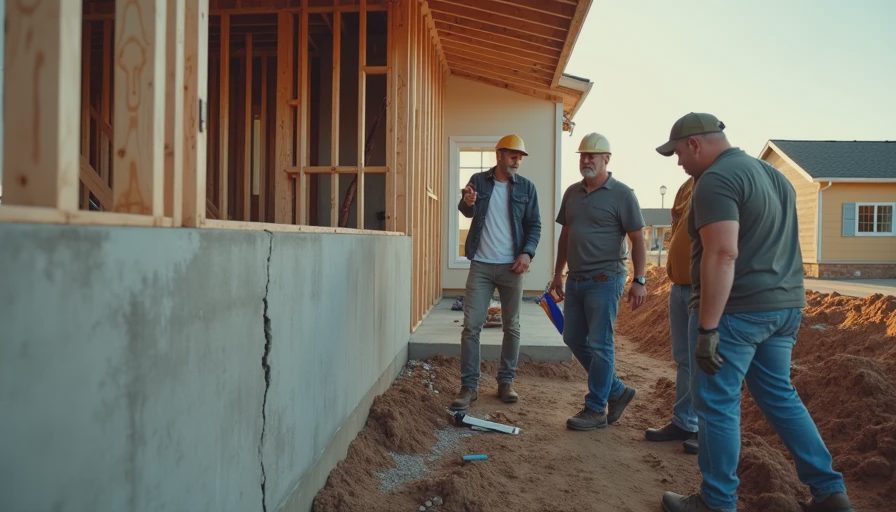
The five warning signs I price first
First, look for diagonal cracks running from the corners of doors and windows. These can reflect differential movement, particularly when the same pattern appears on multiple floors or elevations. Repairing drywall may cost $500 to $2,000, but correcting the underlying movement can run $15,000 to $60,000 or more.
Second, check whether floors feel sloped or have a visible transition between rooms. A laser level is more useful than a marble rolling across the floor, although the marble is cheaper and more entertaining. On a large custom home, mapping elevation changes can cost $1,000 to $3,000. Foundation or pier work can reach $20,000 to $75,000 depending on access and engineering requirements.
Third, inspect doors and windows. One sticky door may be a bad installation. Several doors that bind in the same direction suggest movement or framing distortion. Replacement adjustments might cost a few hundred dollars; reframing openings throughout a house can become a five-figure correction.
Fourth, examine exterior brick, stone, stucco, and siding. Stair-step cracks in masonry, separated veneer, or gaps at trim deserve documentation before someone fills them with caulk. Caulk hides evidence. It does not restore bearing capacity.
Fifth, inspect drainage. Downspouts should discharge well away from the foundation, and soil should generally slope away from the structure. Ponding beside a slab is not a landscaping detail. It is a recurring moisture load that can magnify new home foundation problems.
What the repair numbers actually look like
Minor nonstructural work may include drywall patching, paint, flexible sealant, or isolated grading corrections. A realistic allowance is often $1,500 to $6,000, depending on the number of rooms and finishes. That is annoying money, not catastrophe money.
The middle category is where buyers get surprised. A drainage correction with swales, buried discharge lines, soil adjustment, and selective concrete removal can run $6,000 to $20,000. Replacing cracked tile and repairing cabinets afterward can add another $5,000 to $18,000 in a high-end home. The repair invoice is not limited to the foundation crew.
Structural remediation is the expensive tier. Depending on soil, access, design, and local practice, underpinning with piers, partial slab replacement, excavation, or engineered stabilization can cost $25,000 to $100,000. A $1.2 million property with extensive finished flooring may need a larger reserve because demolition and restoration are priced at luxury-home rates.
This is why I do not accept a builder’s $3,000 allowance without asking what it includes. Does it cover engineering? Testing? Permit fees? Finish removal? Temporary relocation? Painting? A number without a scope is a wish wearing a hard hat.

The inspection process that catches expensive movement
Start before the final walkthrough. Request the foundation plan, geotechnical report, structural drawings, concrete placement records, and any repair or observation notes. You do not need to become a structural engineer, but someone qualified should compare the documents with field conditions.
Use a laser level to establish a floor-elevation map. Record readings on a room plan rather than relying on vague statements such as “the floor seems uneven.” Photograph cracks with a ruler or coin for scale. Mark their location, width, direction, and whether they continue through finishes or masonry.
Check moisture with a meter where stains, efflorescence, or musty odors appear. Inspect the crawlspace or basement after rain if possible. Look for standing water, damp insulation, displaced vapor barriers, corrosion, and cracks that have been painted over. For slabs, consider targeted testing rather than paying for every available service. The goal is to answer a cost question, not collect an impressive binder.
New home foundation problems also require a timeline. Ask when the crack first appeared, when doors began sticking, and whether grading or irrigation changed. A stable defect and an accelerating defect do not deserve the same reserve.
How to protect the purchase decision
Build a written repair schedule with three columns: observed condition, recommended investigation, and probable cost range. For example, “two diagonal garage cracks” is an observation. “Structural engineer review and crack monitoring” is the next step. “$1,500 investigation; $10,000 to $35,000 potential correction” is a useful budget statement.
Do not let fresh paint reset the clock. Cosmetic repairs performed before closing should be photographed and tracked. Ask for follow-up measurements after rain and again after a dry period. Soil movement is seasonal in many parts of the country, and one sunny walkthrough can hide a wet-weather drainage failure.
Price the disruption as well as the construction. If flooring must be removed, budget for furniture handling, storage, dust protection, replacement materials, and matching discontinued products. On a luxury build, specialty stone or wide-plank flooring can turn a structural repair into a finish-replacement problem.
A buyer should also preserve leverage through documentation and qualified inspections, without confusing an inspection report with a legal opinion. I am an engineer, not your attorney. My job is narrower and more useful: identify the defect, estimate the exposure, and show which unanswered question controls the number.
The reserve number I would carry
For a clean report with verified drainage, consistent elevations, and no meaningful cracking, I would still keep a routine maintenance reserve. For a house showing multiple indicators, I would not rely on a token warranty allowance. New home foundation problems deserve a reserve tied to the worst credible repair path, not the cheapest patch proposed during a sales conversation.
A practical screening range might be $5,000 to $15,000 for investigation and minor correction when evidence is limited. If there is measurable floor movement, recurring water intrusion, or widespread cracking, $20,000 to $50,000 is a more serious starting point. Severe movement, difficult access, or extensive finished damage can push the exposure beyond $75,000.
The decision becomes clearer when the numbers are visible. Spend $2,000 on testing and learn that the slab is stable, or discover after closing that demolition and stabilization require $60,000. The first option is unpleasant. The second option is how a new house starts consuming Liam’s truck fund.
New home foundation problems are not automatically a reason to walk away. They are a reason to stop treating “brand new” as evidence of quality. Get the measurements, trace the water, read the plans, and attach a dollar range to every unknown. Then you can negotiate, proceed, or leave with facts instead of a glossy brochure and a false sense of security.





No letters yet — pray write the first.