
A crack can turn a $1.2 million new home into a $25,000 negotiation faster than most buyers expect. Foundation cracks in new construction are not automatically catastrophic, but they are never a reason to shrug and accept the builder's favorite phrase: “Some settling is normal.” That sentence explains nothing about width, location, movement, water, or repair cost. It is the construction equivalent of putting a sticky note over a check-engine light.
The first question is not whether the crack looks ugly. Ask what caused it, whether it is active, and how many dollars you have to spend to correct the underlying condition. A hairline crack in a nonstructural slab may require monitoring and sealant. A stepped crack through masonry, paired with a sloping floor or sticking door, deserves engineering review before you sign.
Why new homes develop cracks
Concrete shrinks as it cures. Soil also moves when moisture changes, especially across expansive clay common in parts of Texas and other regions with active ground conditions. Poor drainage, inadequate compaction, plumbing leaks, excessive water during grading, and a foundation poured before the site was properly prepared can all add movement to the picture.
Not every cause is visible during a walkthrough. A builder may have covered the slab with flooring, insulation, drywall, or cabinets before the movement became obvious. That is why a clean-looking interior does not prove the foundation is sound. Look outside at corners, garage slabs, porch transitions, brick or stone veneer, and exposed stem walls. Cracks often reveal themselves there first.
Foundation cracks in new construction should be mapped, photographed with a ruler for scale, and dated. Record whether each crack is horizontal, vertical, diagonal, or stair-step. Note water staining, efflorescence, displacement, and whether windows or doors near the area operate normally. Sarah would circle undocumented assumptions in red ink; you should do the same with a builder's vague repair note.

Which cracks deserve immediate attention
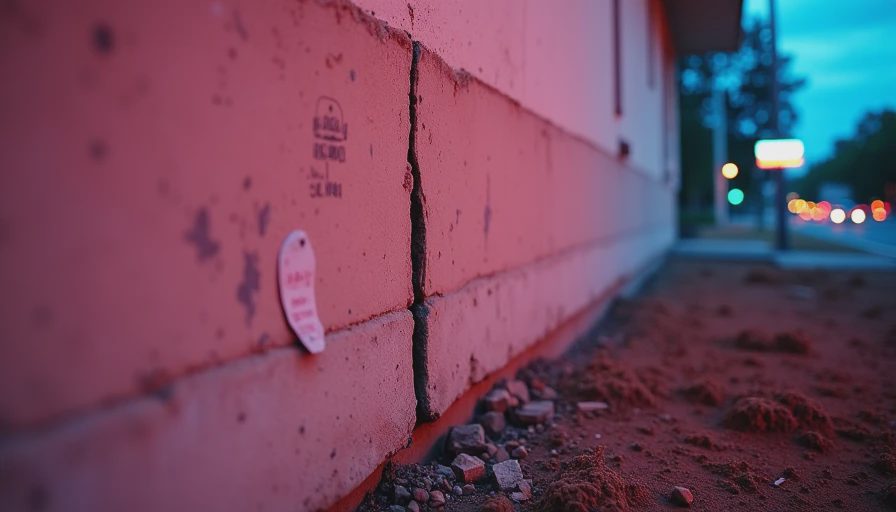
A narrow vertical crack in poured concrete can result from normal curing shrinkage, particularly when it is isolated and dry. That does not make it irrelevant. Water can use a tiny opening as a highway, and an unsealed crack can become more expensive once finished walls conceal access.
Horizontal cracks in a foundation wall are more concerning because they can indicate lateral soil pressure. A diagonal crack extending from a window or door corner may reflect differential movement. Stair-step cracking in brick or block masonry can point to settlement, especially when the pattern repeats across several elevations.
The pattern matters more than a single measurement. A 1/16-inch crack that grows over several months deserves more attention than a stable 1/8-inch shrinkage crack. Check for offsets: one side higher than the other. Check for moisture after rain. Check the floor with a long level or laser, and compare door gaps from one room to the next. These observations do not replace a structural engineer, but they prevent you from treating every line in the concrete as equal.
Foundation cracks in new construction become a serious negotiation item when they appear with drainage failures, uneven floors, recurring water, or multiple locations. At that point, cosmetic caulk is not a repair plan.
What repairs actually cost
Repair pricing depends on access, depth, soil, water, and the work required to reach the foundation. Basic epoxy or polyurethane injection for a limited, nonstructural crack often runs about $500 to $1,500 per crack. Exterior excavation and waterproofing can cost $3,000 to $10,000 for a localized wall, then climb to $15,000 or more when long runs, landscaping, patios, or hardscape must be removed and rebuilt.
A foundation drainage correction, including grading, downspout extensions, or a more substantial drain system, commonly lands between $2,000 and $12,000. Pier or underpinning work is a different category entirely. A small localized repair might cost $8,000 to $20,000; broader movement involving several piers, interior access, plumbing, or floor reconstruction can exceed $30,000.
Those numbers are repair reserves, not dramatic guesses. The builder's proposed $900 sealant job may be perfectly adequate for one stable crack, or it may be lipstick on a drainage failure. Demand a scope that identifies the cause, repair method, warranty, monitoring requirement, and what happens if the crack returns.
The inspection process I would use
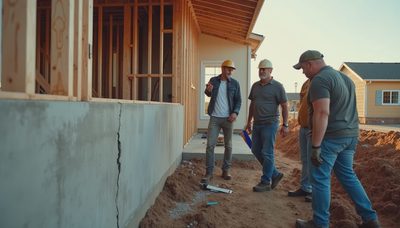
Start with a complete exterior loop before entering the house. Photograph every foundation elevation, including corners, garage edges, porches, retaining walls, and areas hidden by mulch. Then inspect the interior in a grid, room by room. Mark cracks on a sketch and connect interior findings to exterior locations.
Next, measure floor elevation changes with a laser level or professional survey equipment. A small variation does not automatically prove structural failure, but a consistent slope toward a cracked wall changes the risk calculation. Operate doors and windows, inspect baseboards for separation, and look for fresh paint that may conceal repaired drywall.
Ask for the foundation plan, soil or geotechnical report if one exists, concrete placement records, inspection reports, and warranty documentation. You are not trying to win an argument with a superintendent. You are building a cost file. If the builder says the issue is ordinary settling, ask what measurement supports that conclusion and what monitoring interval is recommended.
For foundation cracks in new construction that show displacement, water, or continuing movement, hire a licensed structural engineer rather than relying only on a general inspection. A written opinion may cost several hundred to more than $1,500, depending on access and testing. That is cheap compared with guessing on a seven-figure purchase.
How to handle the builder response
Keep the conversation specific. “We found a crack” invites a patch. “There is a diagonal crack at the northeast garage corner, with a 3/16-inch offset and dampness after rain” demands a more serious answer. Request photographs before concealment, the proposed repair sequence, product specifications, and a completion record.
Do not accept a warranty promise that exists only in a text message or casual conversation. I am not your attorney, and I will not interpret contract language, but from a cost-audit standpoint, undocumented work is difficult to price later. Make the condition and proposed remedy part of the written closing file.
A reasonable response could include monitoring points, drainage correction, engineering review, repair by a qualified contractor, and a post-repair inspection. A weak response includes paint, caulk, an assurance that every new house moves, and a request that you stop asking questions. Liam's truck fund would not survive that kind of budgeting, and neither should your reserve account.
The number to carry before closing
For a clean, isolated hairline crack with no displacement or moisture, I might carry a reserve of $1,000 to $3,000 while monitoring it. For multiple cracks or uncertain drainage, $5,000 to $15,000 is more realistic. Evidence of active settlement, wall bowing, water intrusion, or slab movement justifies a substantially larger reserve, often $20,000 to $40,000 until an engineer and repair contractor narrow the scope.
Foundation cracks in new construction are a defect question and a pricing question. The right outcome is not automatically walking away, and it is not automatically accepting the builder's patch. It is knowing whether the house needs sealant, drainage work, structural stabilization, or simply documented monitoring. Don't ask me whether there is anything wrong with the house. Ask me how many dollars you need to spend to fix it, and make the answer fit the evidence.




No letters yet — pray write the first.