
A $1.2 million new home can have attic insulation gaps that cost more to correct than the builder's warranty department will admit. The insulation may look white, fluffy, and professionally installed from the attic hatch. That proves almost nothing. What matters is continuous coverage, correct depth, sealed penetrations, and a thermal boundary that actually separates your conditioned rooms from a Texas summer, a Colorado winter, or whatever weather your ZIP code supplies.
My first question is not whether the attic has insulation. My question is how many dollars you have to spend to make the assembly perform. For a typical 2,500- to 4,000-square-foot new home, localized repairs might cost $800 to $2,500. Widespread correction, air sealing, and additional blown-in material can reach $4,000 to $12,000. If moisture has already damaged drywall or roof framing, the number climbs quickly.
Why attic insulation gaps appear in new homes
New construction creates a perfect environment for missed coverage. Electricians, HVAC installers, plumbers, and low-voltage contractors all work above the ceiling. Each trade moves through the attic, steps between trusses, pushes insulation aside, and leaves. The final insulation crew is often working against a clock and cannot see every obstruction under loose-fill material.
Common attic insulation gaps occur beside recessed lights, around bath fans, above HVAC platforms, near duct boots, and at the perimeter where the roof meets exterior walls. In vaulted ceilings, batts can slide down or stop short at framing transitions. Around an attic access panel, installers may leave a thin patch because cutting and fitting a rigid cover takes time. A two-inch gap over a hallway may not look dramatic, but it creates a cold or hot strip that shows up on an infrared camera.
Builder-speak often calls this normal trade disturbance. Translation: somebody needs to return with a rake, bags of insulation, and an air-sealing gun. The work is not mysterious. It is simply labor that was skipped or performed badly.

A careful inspection starts with a map, not a flashlight. Photograph the attic from the hatch, then divide the ceiling into zones: bedrooms, living areas, garage separation, bathrooms, and mechanical spaces. Note every visible break, compressed section, bare ceiling area, and darkened patch. A contractor can price a mapped defect. “The attic looks uneven” is how a $900 repair becomes a vague warranty ticket.
What attic insulation gaps actually cost to fix
The smallest defects are usually around penetrations. Air sealing ten to twenty light fixtures, plumbing stacks, or duct penetrations may cost $300 to $900, depending on access and the sealing material required. Replacing damaged or missing batt sections can add $500 to $1,500. Adding blown-in fiberglass or cellulose to correct inconsistent depth commonly runs $1,500 to $4,500 in an accessible attic.
The expensive scenario is not a single bare spot. It is a failed system. If the ceiling plane was never properly air sealed, insulation may be deep enough while conditioned air still escapes through gaps. Correcting that problem can involve moving insulation, sealing top plates and penetrations, installing proper covers over rated fixtures, then restoring insulation to the specified depth. A realistic allowance is $3,000 to $8,000 for many homes, with larger or difficult roof designs exceeding $10,000.
Do not confuse insulation depth with performance. A pile of material over one part of the attic does not compensate for exposed drywall somewhere else. Heat follows the weak points, like water finding the low corner of a poorly graded patio.
How to inspect before you close
The best inspection happens in daylight, before furniture and stored boxes make access difficult. Wear a respirator, gloves, eye protection, and disposable clothing. Do not walk on drywall between trusses. Use planks placed across framing if you need to reach the far side, and keep clear of electrical equipment and unstable ductwork.
Look for these five conditions:
- Bare or thin areas visible at the ceiling line.
- Compressed insulation under ducts, platforms, or temporary walk boards.
- Gaps at exterior walls, dropped soffits, and framing transitions.
- Unsealed holes around pipes, wires, lights, and bath-fan housings.
- Stains, damp insulation, rusted fasteners, or fungal-looking discoloration.
A thermal camera is useful when temperature differences exist, but it is not a magic truth machine. It shows surface patterns, not a complete diagnosis. A blower-door test can identify excessive air leakage, while an insulation-depth ruler and photographs establish what is physically present. Ask for the insulation product, installed R-value, and intended coverage depth. If the answer is a marketing phrase such as “energy efficient package,” Sarah would put a red line through it before allowing it on the spreadsheet.
The defects that insulation cannot hide
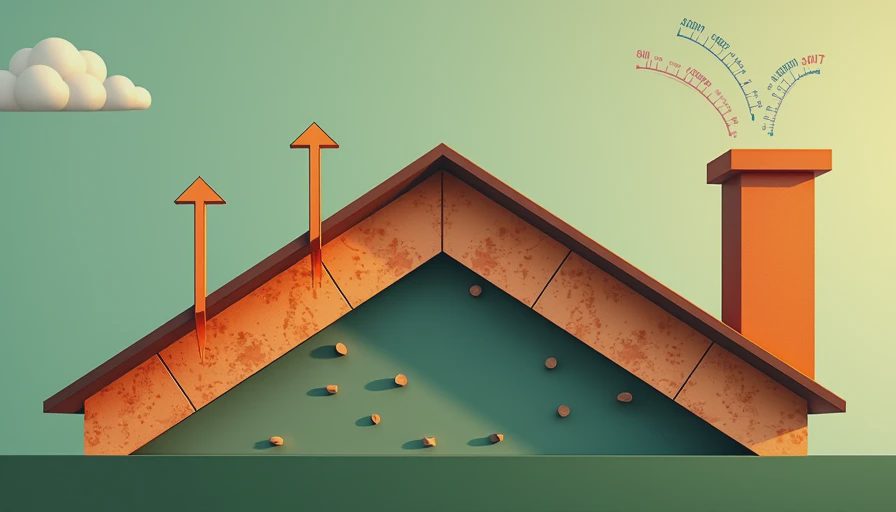
Attic insulation gaps often point to a broader problem at the ceiling plane. If the drywall is not sealed around penetrations, warm indoor air can enter the attic and condense on cold surfaces. In humid climates, that can produce damp insulation, musty odors, stained ceiling paint, and eventually wood moisture concerns. In cold climates, indoor moisture can migrate upward and contribute to frost or roof sheathing condensation.
Pay attention to bathroom exhaust fans. A fan that terminates in the attic instead of outdoors can dump gallons of moisture into the roof space over time. Insulation around that duct may be perfectly installed and still be irrelevant to the underlying defect. The repair could require a new roof penetration, insulated duct, exterior termination, and ceiling patching. Budget $750 to $2,000 for a straightforward correction; difficult roof access can push the total higher.
Also inspect HVAC ducts. A disconnected or poorly insulated duct can make one bedroom uncomfortable while increasing equipment runtime. Sealing accessible duct joints with approved mastic and repairing insulation may cost $500 to $2,000. If the system was improperly designed, insulation is not the cure. It is just the visible witness standing beside the crime scene.
How to document the builder's shortcut
Take wide photographs that show the room below, medium photographs that locate the defect, and close photographs that show the missing or compressed material. Include a tape measure or insulation ruler in at least some images. Record the date, outdoor temperature, and the room affected. A written repair request should identify the location, condition, and requested result rather than simply demanding “more insulation.”
A useful scope might say: seal penetrations at the second-floor ceiling, restore displaced insulation, provide continuous coverage at the exterior wall line, and verify the installed depth across the affected zone. That language describes an outcome without pretending to write a contract or dictate a proprietary product.
Get a cost from an independent insulation contractor, not only the builder's maintenance crew. A builder may have a lower internal labor number, but the independent estimate gives you a benchmark. For a luxury purchase, a $2,000 third-party evaluation can protect a repair reserve of $8,000 or more. That is not overspending; it is buying better arithmetic.
The repair decision before closing
If attic insulation gaps are isolated, accessible, and documented, require correction before closing or obtain a written repair allowance that reflects real labor. A $250 credit is not meaningful when the actual correction costs $2,500. Builders sometimes price the visible material and ignore mobilization, air sealing, cleanup, and verification.
If you find widespread missing insulation, moisture staining, unsafe access, or multiple unsealed penetrations, pause the cheerful walkthrough. The issue is no longer cosmetic. It is a building-envelope performance problem with consequences for comfort, energy use, indoor air quality, and future ceiling repairs.
The final verification should happen after the work, not through a checkbox marked complete. Return to the attic, photograph the repaired areas, measure coverage, and confirm exhaust fans terminate outside. New does not mean finished correctly. It means the invoice is fresh. Before signing a seven-figure check, spend an hour looking above the ceiling and attach a dollar figure to every shortcut you find.




No letters yet — pray write the first.