A new house can arrive with a builder warranty, untouched appliances, and a price that looks refreshingly final. Then the invoices begin. The hidden costs of buying new construction often add $40,000 to $150,000 to a luxury purchase, depending on the lot, specifications, and what the sales office called an "included feature." Don't ask me if there is anything wrong with the house. Ask me how many dollars you have to spend to make it perform properly.
The first mistake is treating the contract price as the project budget. A new build is not a finished financial event. It is a partially disclosed construction project with several cost categories waiting outside the closing statement. Some are predictable. Others are buried in soil, drainage, allowances, warranty exclusions, and the gap between a model home and your actual house.
The Lot Can Eat Your Budget Before Framing Starts
Site work is the first place where new-home math goes feral. A sloped lot may require retaining walls, engineered fill, piers, soil stabilization, or a longer driveway. In Central Texas, expansive clay can turn an ordinary foundation package into a $25,000 to $80,000 engineering problem. In colder regions, frost-depth requirements and difficult excavation can produce a similar surprise.
The lot premium does not necessarily pay for the work needed to build on the lot. It usually pays for location, views, or scarcity. Clearing trees can cost $3,000 to $15,000. Rock excavation can add $10,000 to $40,000. A substantial retaining wall may run $20,000 to $75,000 before landscaping is restored. Ask for the geotechnical report, grading plan, and site-work allowance. If nobody can show you those documents, the number in your head is not a budget. It is a wish.
The hidden costs of buying new construction become especially expensive when the finished grade is wrong. Water flowing toward the foundation is not a cosmetic defect. Correcting swales, downspouts, and landscape drainage after sod and irrigation are installed can cost $8,000 to $30,000, and the excavation will not improve your flower beds.

“Included” Does Not Mean Ready to Live In
A base price often includes a kitchen, lighting, flooring, plumbing fixtures, and landscaping in the same way a restaurant includes a plate: technically present, rarely what you actually want. The upgrade studio is where the second price is created. A $1.1 million advertised home can become $1.25 million after flooring, cabinets, electrical work, appliance packages, trim, tile, and lighting are selected.
The expensive part is not always the visible upgrade. A larger refrigerator may require cabinet changes and a new electrical circuit. A freestanding tub can require different plumbing locations. A gas range may need a dedicated gas line, makeup air, and a more expensive hood. A pool-ready yard may include only a capped connection while excavation, equipment, decking, fencing, and permits remain yours.
Allowances deserve forensic attention. If the contract carries a $12,000 lighting allowance but your fixtures cost $27,000, the $15,000 difference is obvious. Less obvious are installation charges, freight, tax, storage, and change-order fees. Before signing, create a room-by-room schedule with the allowance, your expected selection, installation, and tax. Sarah would mark every blank cell in red. She is correct.
Utilities, Permits, and Exterior Work Arrive Separately
The hidden costs of buying new construction also include expenses that do not appear in the kitchen showroom. Utility connection fees can range from a few hundred dollars to several thousand. Rural or semi-rural property may need a private well, septic system, propane tank, transformer, or extended service line. A septic system can cost $10,000 to $30,000, while a long electrical run can become a five-figure item.
Exterior completion is another common budget hole. Builder-grade landscaping may cover only front-yard sod and a few shrubs. Fencing, gates, privacy screens, irrigation zones, outdoor lighting, gutters, mailbox installation, and a usable patio can add $15,000 to $60,000. A high-end buyer may also need window coverings, garage storage, a driveway gate, security cameras, and a generator connection. None of these make the house look unfinished on the listing sheet. All of them affect whether you can live there without a contractor on speed dial.
Confirm who pays for permits, impact fees, utility tap fees, final grading, erosion control, and temporary power. Verbal assurances are not a cost schedule. Get the amount and responsible party in writing, then carry a contingency rather than pretending construction has never met a buried boulder.

New Does Not Eliminate Defects or Repair Reserves
A brand-new home can have cracked tile, leaking windows, improperly sloped showers, missing fire blocking, unsealed ductwork, or a roof detail that was installed during a Friday afternoon rainstorm. New materials do not compensate for poor sequencing or rushed labor. The hidden costs of buying new construction often show up after the warranty process has become a slow exchange of photographs and polite emails.
Budget for independent inspections at pre-drywall, substantial completion, and before closing. A general inspection may identify the symptom, but the useful question is cost and consequence. A missing flashing detail might be a $600 repair today and a $20,000 wall-remediation project after repeated water intrusion. A foundation crack may be harmless shrinkage, or it may justify monitoring, drainage changes, and structural review.
Set aside at least $15,000 to $40,000 for the first year on a typical upscale build, and more for a complicated custom home. That reserve covers items such as drainage correction, HVAC balancing, door and window adjustment, touch-up painting, appliance defects, and incomplete exterior work. It is not an admission that the builder failed. It is an admission that buildings are assembled by humans, and humans occasionally install a bathroom fan that vents into an attic.
Carrying Costs and Delayed Completion Matter
A delayed closing can create real dollars even when nobody sends you a repair invoice. Temporary housing, storage, extended construction-loan interest, rate-lock fees, extra insurance premiums, missed rental income, and rescheduled movers can total $5,000 to $25,000 in a matter of weeks. Luxury furniture and window treatments may also require deposits months before the rooms are usable.
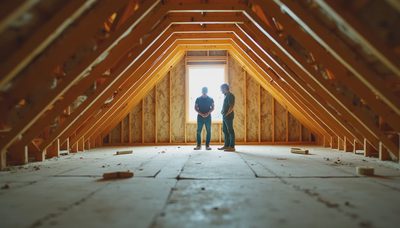
During the final walk-through, test every appliance, outlet, fixture, window, door, garage door, thermostat, and water shutoff. Run multiple fixtures at once. Check hot water recovery. Look at the attic, crawlspace, mechanical room, roof penetrations, and grading, not just the pretty kitchen. Photograph serial numbers and unfinished work. A punch list is not merely a collection of cosmetic requests; it is a record of what remains incomplete and what could become your expense later.
Build a Cost Audit Before You Commit
The hidden costs of buying new construction are manageable when they are identified before the deposit becomes emotionally expensive. Start with the advertised price, then add lot work, upgrades, allowances, utility charges, permits, exterior completion, inspections, furnishings, and carrying costs. Add a contingency of 5% to 10% for a straightforward production home. A complex custom build with difficult soil or extensive site work deserves a larger reserve.
Then hire the right eyes. A standard inspection tells you what is visible. A construction-focused review connects defects to scope, sequence, and dollars. Ask for a written repair reserve analysis that distinguishes immediate corrections from monitoring, warranty work, and future capital repairs. The report should identify whether a $2,000 drainage adjustment prevents a $25,000 moisture problem, not merely label the yard “poorly graded.”
That is the practical answer to the hidden costs of buying new construction: price the house you will own, not the model you were shown. Before you sign, walk the site with the plans, question every allowance, verify every utility responsibility, and keep cash available after closing. New can be excellent. It is simply not the same thing as complete, tested, or free.


No letters yet — pray write the first.