The cost of new construction inspection usually falls between $400 and $1,500 for a standard residential inspection, but that fee is the smallest number on the page. On a $1 million home, one missed drainage defect, structural deviation, or failed waterproofing detail can create a $10,000 to $75,000 repair obligation after closing. The real question is not whether the inspection is expensive. It is whether the inspection finds problems while the builder still has access, labor, and financial responsibility on the site.
A new house is not a clean house by definition. It is a recently assembled system with dozens of subcontractors, rushed finish work, incomplete commissioning, and paperwork written to make every issue sound temporary. “Normal settling” can mean cracked masonry. “Minor grading concern” can mean water moving toward the foundation. I do not ask whether anything is wrong. I ask how many dollars you have to spend to correct it.
What the inspection fee actually includes
A basic new-construction inspection commonly costs $400 to $800 for a typical single-family home, with luxury properties often reaching $900 to $1,500 because they contain more square footage, mechanical equipment, roof areas, balconies, retaining walls, and finish systems. Austin, Dallas, Denver, Seattle, and other high-cost markets can run higher, particularly when qualified inspectors have limited availability.
The price should reflect time and scope, not just the number of rooms. A rushed two-hour visit followed by a generic PDF is not equivalent to a full day reviewing the structure, attic, crawlspace, exterior drainage, electrical panels, HVAC installation, plumbing fixtures, and life-safety devices. For a large custom home, expect the inspector to spend several hours on site and additional time documenting findings with photographs and repair descriptions.
The cost of new construction inspection can also include separate visits. A pre-drywall inspection often costs $300 to $600. The inspector reviews framing, plumbing, electrical, ductwork, insulation, fire blocking, and penetrations before drywall conceals them. A final inspection may cost another $400 to $1,000. A 30-day or 11-month warranty inspection can add $350 to $900, depending on scope. Those staged visits are not duplicate charges; they are different opportunities to see different parts of the building.

Why one final inspection is usually inadequate
At the final walkthrough, the walls are painted, cabinets are installed, and the builder has polished the evidence. You can see a damaged countertop or a door that does not latch. You cannot see an unsealed plumbing penetration, missing roof-to-wall flashing, improperly supported ductwork, or a structural connector buried behind drywall.
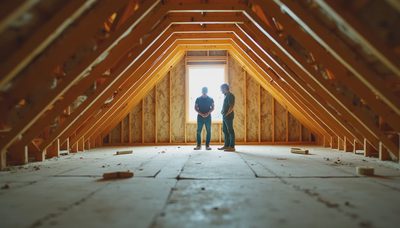
The pre-drywall stage is where inspection dollars produce unusually useful information. A missing nail in a hurricane tie may cost less than $100 to correct while crews are present. The same issue discovered after insulation and drywall may require demolition, patching, repainting, and a return visit from several trades. That can become a $2,000 to $6,000 repair, assuming the location is still accessible.
The cost of new construction inspection is easier to justify when you compare it with the price of concealment. A foundation drainage correction can run $3,000 to $15,000. Replacing improperly installed flashing around several windows may cost $5,000 to $20,000. Remediating water intrusion behind finished walls can climb past $25,000 once drying, mold treatment, cabinet removal, and reconstruction enter the estimate. A $600 inspection is not a guarantee against every defect, but it is inexpensive access to information before the house becomes your problem.
The defects that create the largest repair bills
Cosmetic defects are irritating, but they rarely threaten the budget. The expensive findings are usually related to water, structure, mechanical systems, and concealed workmanship. In Central Texas, poor lot drainage and inadequate foundation moisture control deserve immediate attention because expansive soil does not need much encouragement to move.
A damaged or incorrectly sloped yard may require grading, soil replacement, drainage swales, channel drains, or underground piping. Budget ranges commonly begin around $2,500 for localized correction and can reach $20,000 or more for extensive drainage work. Foundation movement is a different category. Engineering review, monitoring, pier installation, interior repairs, and exterior drainage can produce a $15,000 to $60,000 exposure, depending on cause and access.
Roof and flashing failures are another expensive class of defect. A few misplaced fasteners are a builder punch-list item. Missing step flashing across a large roofline is a water-management failure. Repairs can range from $1,500 for localized work to $30,000 or more when roofing, sheathing, insulation, and interior finishes are involved.
Mechanical systems deserve a cost review rather than a simple pass-or-fail label. An oversized HVAC system may cool quickly while leaving rooms humid. Poor duct sealing can raise operating costs and create comfort complaints. Corrective work might cost $500 for sealing and balancing or $12,000 for substantial duct replacement. A failed water heater, heat pump, or electrical panel is easier to price than an installation that technically operates but was installed poorly.
How to read a new-build inspection report in dollars
A 60-page report can still be financially useless if every observation has the same priority. I sort findings into three buckets: immediate safety or water exposure, repair-before-closing defects, and monitorable cosmetic work. Then I attach a realistic cost range to each item, including demolition, access, disposal, finishing, permits where applicable, and trade minimum charges.
For example, “seal exterior penetration” is not a sufficient recommendation on a luxury home. The useful version identifies the location, explains the likely water path, and estimates perhaps $300 to $900 for a simple sealant repair or $4,000 to $10,000 if siding and flashing must be removed. “Cracked tile” might be a $250 replacement, or it might indicate slab movement that requires engineering review. The visible symptom is not the budget.
Ask the inspector to separate builder corrections from owner maintenance. A loose cabinet pull and missing attic insulation should not be buried beside potential structural movement. Photograph every issue, mark its location on a floor plan, and request completion evidence before accepting a verbal promise. Your objective is a closeout record, not a pleasant conversation in a spotless kitchen.
What a forensic inspection adds
A standard inspection describes conditions. A cost-focused inspection connects those conditions to scope, access, trade sequencing, and likely dollars. That distinction matters when a builder responds with “we will take care of it.” Take care of what, exactly? A drainage defect may require excavation before landscaping is complete. A framing problem may require an engineer, not a carpenter with a tube of caulk.
The cost of new construction inspection rises when you add engineering review, infrared scanning, sewer scope work, drone roof documentation, pool inspection, or specialized testing. Those services can add $150 to $1,500 each. They are not automatic requirements for every property, but a $1.3 million home with a flat roof, multiple retaining walls, a detached garage, and a pool deserves more than a quick flashlight tour.
A sensible scope follows the risk. Use a sewer scope when the line is long, heavily landscaped, or subject to questionable installation. Consider thermal imaging when moisture staining or HVAC imbalance is present. Bring in a structural engineer when there are meaningful foundation, framing, retaining-wall, or balcony concerns. The goal is not to order every test. It is to avoid paying for a specialist after the evidence has been covered.
A practical inspection budget for a luxury new home
For a $1 million to $2 million new build, I would generally reserve $1,500 to $4,000 for staged inspections and targeted specialty work. That could include pre-drywall inspection, final inspection, sewer scope, roof review, and an 11-month warranty visit. A more complex property with a pool, elevator, extensive site walls, or unusual mechanical systems may justify $5,000 or more.
That number should be compared with a repair reserve, not viewed in isolation. If an inspection identifies $40,000 in credible corrections, the buyer has useful leverage before closing. If the builder resolves the work properly, the inspection may have protected the schedule and prevented future damage. If the builder refuses meaningful correction, the buyer has a documented basis for reconsidering the transaction with the appropriate professionals.
The cost of new construction inspection is a line item. Unpriced defects are liabilities. Sarah would circle the first number in red ink, then circle the second one twice. I do the same. Get the pre-drywall visit if access is available, demand a detailed final inspection, and price every serious finding before signing off. New does not mean finished, and finished does not mean correct.



No letters yet — pray write the first.