A $1.2 million new house can hide $40,000 in unfinished work, weak specifications, and repair exposure behind clean drywall. That is why a cost overruns new build inspection matters. A standard inspection identifies defects. A forensic inspection attaches a dollar amount, separates builder responsibility from buyer upgrades, and tells you whether the repair reserve is realistic. Do not ask whether anything is wrong with the house. Ask how many dollars you have to spend to fix it.
Why new construction still produces old construction problems
New does not mean complete, coordinated, or built correctly. It means the materials are recently installed. Those are different statements, and builders rely on buyers confusing them.
I regularly see missing flashing, unsealed penetrations, poorly compacted fill, uneven slabs, incomplete grading, and mechanical systems installed before the surrounding work is ready. A house can pass a casual walkthrough while carrying $15,000 in drainage work, $8,000 in electrical corrections, or $25,000 in flooring and drywall replacement.
The first pricing mistake is treating every item as an isolated defect. A cracked tile may be a $400 replacement. If the crack comes from slab movement, the actual exposure can include demolition, leveling, moisture testing, new tile, painting, and temporary furniture storage. That is a $6,000 to $18,000 problem wearing a $400 disguise.
A useful cost overruns new build inspection follows the chain from symptom to cause to consequence. I photograph the condition, measure it, identify the trade responsible, and price the work using local labor, access, disposal, and finishing costs. Sarah would reject any spreadsheet that listed only the tile.

The four buckets that inflate a new-home budget
Most surprise costs fall into four buckets. The first is omitted scope: items shown in marketing materials but absent from the signed selections or construction documents. Common examples include landscape drainage, window coverings, garage storage, appliance connections, retaining walls, and final grading. A buyer can discover $20,000 of omissions after assuming the home was turnkey.
The second bucket is allowance exposure. An allowance is a budget placeholder, not a promise that the selected product will fit the number. A $6,000 lighting allowance disappears quickly in a luxury house with designer fixtures, specialty dimmers, transformers, and installation changes. A realistic overage can reach $10,000 or more.
The third bucket is defective work. Poor roof-to-wall flashing, missing sealant, undersized drainage, and incorrect HVAC balancing are not cosmetic annoyances. The fourth is owner-change cost, including upgraded stone, plumbing fixtures, millwork, or smart-home equipment. These are legitimate choices, but they should not be confused with correction costs.
The cost overruns new build inspection report should keep those buckets separate. Otherwise, a builder can present a $35,000 total that quietly combines $18,000 of buyer upgrades with $17,000 of actual deficiencies. That is not a repair budget. It is accounting camouflage.
How I price defects instead of merely listing them
A credible estimate begins with quantities. I measure the linear feet of failed sealant, square feet of damaged flooring, number of improperly terminated ducts, and cubic yards of soil or gravel needed for drainage. Then I apply realistic production assumptions. Replacing a section of siding may cost $1,200 in materials but $3,500 after mobilization, scaffold access, painting, and color matching.
I also price the hidden work. Opening a wall to correct a plumbing leak requires demolition, protection of finished surfaces, drying, reconstruction, texture blending, and repainting. In a high-end home, matching a custom finish can cost more than the original drywall installation. A $900 visible repair can become a $4,000 invoice.
Schedule pressure matters too. If a defect is found before closing, multiple trades may already be mobilized. After closing, you may pay a minimum service charge for each visit. HVAC contractors, electricians, painters, and flooring installers do not coordinate for free. A cost overruns new build inspection should show both the efficient pre-closing scenario and the more expensive post-closing scenario.
I typically add a defined contingency rather than a vague cushion. Five percent may be reasonable for well-documented minor work; complex moisture or structural exposure deserves a larger reserve. The number should reflect uncertainty, not optimism.
The expensive red flags I look for first
Water is the fastest way to turn a punch-list item into a serious budget. I check roof penetrations, window corners, balcony transitions, exterior doors, hose bibs, and grading at the foundation. Staining below a window may indicate failed flashing rather than a bad paint job. Depending on access and damage, remediation can run from $3,000 to more than $20,000.
I inspect the attic for disconnected ducts, crushed insulation, roof framing changes, and unsealed plumbing or electrical penetrations. Missing insulation is easy to see; compressed insulation is harder and can reduce performance while still appearing present. Corrective work might cost $1,500 in an accessible attic or $7,500 where finished ceilings must be opened.
The slab gets equal attention. A floor that is out of tolerance by 3/8 inch can create tile lippage, cabinet shimming, and door problems. Minor grinding may cost $1,000 to $3,000. Broad leveling before installation can exceed $12,000. If tile is already installed, demolition and replacement multiply the bill.
The cost overruns new build inspection process is designed to find these conditions while access still exists. Once cabinets, landscaping, and furniture conceal the evidence, the price usually rises.
A practical pre-closing cost audit
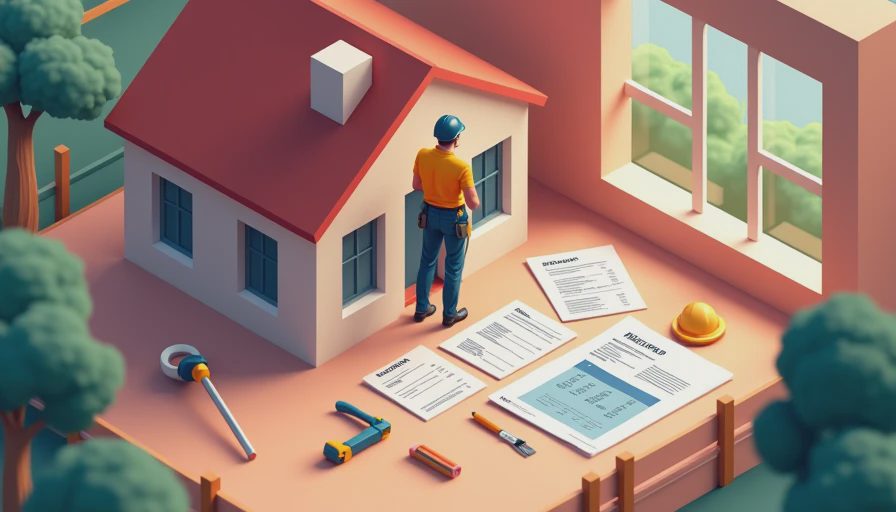
Start four to six weeks before closing, not the morning of the final walkthrough. Request the current plans, selections, allowance schedule, change orders, equipment list, warranty procedures, and any prior punch lists. Missing documents are themselves a warning because they make scope reconciliation difficult.
Next, walk the property in a fixed sequence: site and drainage, exterior envelope, roof and attic, structure, plumbing, electrical, HVAC, interiors, and finish quality. Photograph each finding with a reference scale. Record room location, trade, probable cause, urgency, and access difficulty. “Sealant missing at rear window” is useful. “Window issue” is not.
Then compare what was promised with what exists. Count fixtures. Verify appliance circuits. Confirm that exterior outlets, hose connections, garage receptacles, exhaust fans, shower valves, and condensate drains are installed and functional. A missing $250 outlet can expose a broader electrical coordination failure.
Finally, assign each item a cost range and timing. Immediate correction covers safety, water intrusion, structural concerns, and systems that cannot perform. Near-term work includes failing finishes and drainage. Monitor-only items should have a reason and a future allowance, not a shrug.
This cost overruns new build inspection checklist gives you a negotiation record grounded in scope and money. It also helps you decide whether a builder’s proposed credit covers the actual work or merely makes the issue look tidy.
What a serious report should deliver
A useful report is not a 50-page catalog of blurry photographs. It should provide an executive summary, defect register, quantities, probable causes, repair scopes, cost ranges, assumptions, and priority ranking. Each major issue should show the consequence of delay. For example, “replace failed exterior sealant within the maintenance cycle” is different from “investigate active moisture before closing.”
The report should also identify limitations. Hidden framing, buried drainage, and concealed piping cannot be priced with certainty without selective openings. That does not justify ignoring them. It means the report should recommend targeted testing and carry an appropriate reserve.
For a $1 million-plus property, a $2,500 to $6,000 forensic review can be inexpensive compared with one missed envelope failure or slab correction. The goal is not to manufacture a rejection. It is to convert uncertainty into a defensible number.
A cost overruns new build inspection is the financial translation of a technical inspection. It tells you whether the house is complete, whether the repair exposure is manageable, and whether the builder’s clean final walkthrough has any connection to the ledger. New construction deserves scrutiny precisely because buyers assume the difficult part is over. It is not over until the scope, condition, and dollars agree.



No letters yet — pray write the first.