A $1.2 million new home can carry a $40,000 repair problem before the first mortgage payment clears. That is why a pre purchase inspection should be more than a technician tapping drywall and checking outlets. You need to know what is wrong, why it happened, how urgent it is, and what the correction will cost. "New" describes the age of the structure. It does not guarantee straight framing, dry assemblies, working drainage, or a finished mechanical system.
I have reviewed enough new construction to know how the process usually goes. A buyer receives a polished report, a builder representative calls the deficiencies minor, and everyone hopes the closing date survives. Hope is not a repair reserve. My job is to turn observations into dollars before those dollars become yours.
What a serious inspection should examine
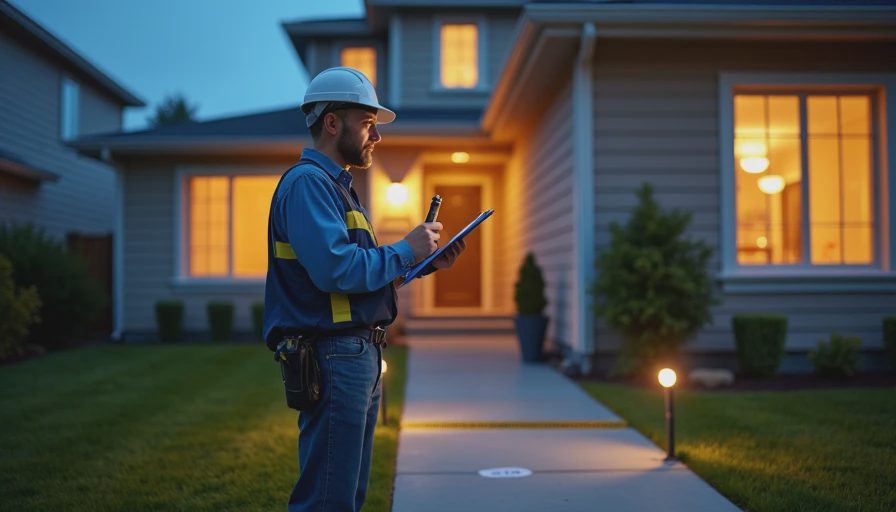
A useful pre purchase inspection starts outside, because water is the most expensive and persistent enemy in residential construction. I look at grading, swales, retaining walls, foundation drainage, roof penetrations, flashing, siding transitions, window installation, and the termination points for gutters and downspouts. A downspout discharging beside the slab is not a cosmetic note. Correcting drainage, adding extensions, rebuilding a small section of landscape grade, and repairing moisture damage can easily run $3,000 to $12,000.
Inside, the inspection should connect symptoms to systems. A cracked tile may indicate movement in the substrate. A cold room may point to missing insulation or an unbalanced HVAC system. A slow drain can be a simple trap issue, or it can signal improper slope hidden behind finished walls. Thermal imaging, moisture readings, attic access, crawlspace access, and representative electrical testing add useful evidence, although none replaces judgment or destructive investigation where appropriate.
The report should identify locations precisely. “Seal around windows” is weak. “Second-floor west bedroom window has open sill-to-trim joint, staining at the lower right corner, and elevated moisture reading” gives the builder a repair target and gives you a defensible cost discussion.

The defects that look small but price large
Builders often describe isolated findings as normal punch-list work. Some are. A missing cabinet adjustment is not the same as a roof-to-wall flashing failure. The pre purchase inspection has to separate inconvenience from liability exposure and from future reconstruction.
Here are realistic repair bands for common new-build findings:
- Improper shower waterproofing: $4,000 to $15,000 for localized removal and reconstruction; more if framing or adjacent flooring is damaged.
- Negative grading near a foundation: $2,500 to $10,000 for soil correction, drainage work, and landscape restoration.
- Unsealed attic or duct penetrations: $800 to $3,500, with higher costs when insulation must be removed and replaced.
- Missing or poorly installed roof flashing: $1,500 to $8,000 for targeted corrections; a broader roof tear-off can exceed $15,000.
- Slab movement affecting tile or stone: $6,000 to $25,000 depending on room size, finish material, and whether structural evaluation is required.
- Incorrect electrical panel labeling or incomplete circuits: $300 to $2,000 for correction, but unsafe wiring behind the panel can change the number quickly.
Those figures are not bids. They are decision-grade allowances. A pre purchase inspection should explain the assumptions behind each allowance: access, finish quality, demolition, disposal, permits, testing, and the possibility of concealed damage. Sarah, who teaches math and distrusts tidy spreadsheets, would ask the same question I do: what is included in that number?
Reading builder responses without losing the plot
The phrase “within tolerance” needs a measurement attached to it. Tolerance for what, and according to which installation requirement? “Some settling is normal” does not answer whether a floor is out of plane by 3/8 inch, whether doors bind, or whether tile substrate preparation was skipped. “Cosmetic only” is equally incomplete when a stain indicates water behind a wall.
During a pre purchase inspection, photograph each issue with a scale, location, and date. Group findings by system instead of sending the builder a random list of 47 complaints. Water management, structure, roofing, mechanical systems, life safety, and finishes are easier to prioritize and harder to dismiss.
Ask for a written correction plan that identifies the trade responsible, proposed method, and completion evidence. A painter covering a recurring ceiling stain is not the same as tracing the roof leak. Replacing cracked grout is not the same as correcting movement below the tile. You are not trying to win an argument with a warranty manager. You are trying to prevent a cheap patch from becoming your expensive repair.
Timing matters more than most buyers realize
The best pre purchase inspection occurs early enough to create leverage and late enough that major systems are installed. For new construction, that often means one inspection before insulation and drywall, another before closing, and a follow-up after repairs. The first visit can reveal missing blocking, incomplete plumbing supports, unsealed penetrations, damaged ductwork, and framing errors that become costly once covered.
A final walkthrough catches different failures: appliances that do not operate, disconnected exhaust fans, missing trim seals, nonfunctional outlets, HVAC balancing problems, drainage behavior after rain, and doors that no longer latch. A home can pass a basic visual review while still carrying a $10,000 correction list.
Schedule enough time to test the house rather than race through it. Bring the plans, finish schedule, appliance specifications, and any available drainage or structural documents. If the home has a pool, detached garage, elevator, retaining wall, or smart-home controls, include those systems in the scope. Specialty features are excellent places to hide specialty bills.
Building a repair reserve from findings
A pre purchase inspection report becomes useful when it turns into a ledger. Put every finding into one of four columns: immediate safety or water risk, required correction before closing, warranty observation, and monitoring item. Then assign a low and high allowance. A $2,000 to $4,000 range for a drainage correction is more honest than pretending the issue costs exactly $2,750 before a contractor sees the site.
For a $1 million-plus home, I want the buyer to understand whether the documented work is $8,000, $25,000, or an uncertain exposure that could exceed $50,000. Those are different negotiations and different decisions. A loose handrail and an unverified foundation movement should never occupy the same priority level simply because both appear as bullet points in a PDF.
Keep invoices, photos, moisture readings, and completion records together. If the builder repairs a wall, obtain evidence of the underlying source and the replacement materials. If a roof penetration is corrected, photograph the flashing before it disappears under sealant. Ranger could locate a sprinkler leak by digging, but your documentation should be more scientific than his method.
The practical buyer checklist
Before hiring an inspector, ask whether the scope includes new-construction experience, attic and crawlspace access, moisture measurement, roof and drainage review, HVAC performance observations, and a cost-oriented narrative. Ask what the inspector will not do; honest boundaries are more valuable than a promise to inspect everything.
During the pre purchase inspection, attend if possible. Watch where the inspector spends time. Ask why a crack matters, what evidence supports the conclusion, and what a reasonable correction involves. You do not need to become a structural engineer. You do need enough information to recognize when “punch list” is being used as a bucket for an unresolved building problem.
Finally, do not confuse a clean-looking report with a low-risk house. Read the photographs, limitations, and recommended follow-up. If a suspected moisture issue requires invasive testing, price that testing before closing rather than burying it under optimism. The right pre purchase inspection does not merely help you find defects. It tells you how much cash, time, and disruption each defect could consume.
A new home should start with a clear ledger, not a stack of assumptions. Don't ask me if there is anything wrong with the house. Ask me how many dollars you have to spend to fix it.



No letters yet — pray write the first.