
$10,000 on a spreadsheet is not a repair plan unless you know what it buys. For buyers who want a home inspection report explained in dollars, start with three questions: What is actually damaged, what remains hidden, and who can price the complete repair? The report is a map of visible conditions, not a warranty or a fixed-cost estimate. A short note about water intrusion can deserve more attention than ten pages of cosmetic touch-ups.
Home inspection report explained: the first pass
Read the summary first, then go back to the full entry and its photos. Summaries are useful indexes, but they can compress an important distinction: an inspector may have observed a stain, measured elevated moisture, or simply found an area inaccessible. Those are three different facts, and they do not carry the same repair scope.
Sort the findings by consequence rather than page count. Active electrical hazards, gas odors, suspected water intrusion, significant structural movement, and unsafe stairs deserve prompt attention. For a gas odor or another immediate hazard, leave the area and contact the appropriate utility or emergency services rather than waiting for a follow-up appointment.
Next, look for problems that can spread quietly: poorly drained exterior surfaces, roof penetrations, plumbing leaks, and HVAC condensate issues. A scratched cabinet door may be annoying; water behind that cabinet can turn a small finish repair into a demolition and drying job. Neither the length of a comment nor a red font tells you the final bill.
Finally, mark every item labeled inaccessible, not inspected, or limited. An attic blocked by stored materials or a roof viewed only from the ground is not necessarily defective. It is an unanswered question. Ask whether access can be arranged before your inspection deadline and whether the inspector can return.

Decode the language without inventing a diagnosis
Inspectors generally describe observable conditions and recommend further evaluation when the cause or extent is beyond the inspection. Read the exact wording before deciding what trade to call.
A ceiling stain means discoloration was observed. It does not, by itself, establish an active leak or identify the source. Ask whether moisture was measured, whether the area was dry at the time, and what sits above it. A qualified roofer or plumber may be appropriate depending on the location. Fresh paint can obscure the history, so absence of a stain is not proof that an assembly has never leaked.
A crack deserves measurements and context, not an instant foundation diagnosis. Note its location, width, direction, whether the edges are displaced, and whether doors or floors nearby show related movement. A structural engineer can assess concerning patterns and determine whether additional investigation or monitoring is warranted. A photograph without a scale is useful documentation, but it is not a movement history.
A recommendation for a licensed electrician usually means the inspector observed a condition that needs qualified evaluation or correction. Ask for the specific defect and location. An open junction box and a panel with signs of overheating are both electrical findings, but they are not interchangeable in urgency or scope.
Turn findings into a repair reserve
Start a separate line for each issue: observed condition, location, proposed investigation, possible repair, and who will provide the price. Add columns for access, finish restoration, permits where required, and follow-up testing. If a contractor gives a single number, ask what is included and excluded.
For example, a hypothetical $2,000 plumbing repair could exclude opening a tiled wall, drying wet framing, replacing damaged insulation, and restoring matching finishes. If those tasks are necessary, the pipe repair is only one line in the ledger. The actual total depends on access, damage, materials, and local labor rates; the report alone cannot establish it.
Use two figures when the scope is uncertain: a priced amount for work that can be defined now, and a separate allowance for investigation or concealed damage. Label the allowance as an assumption, not a contractor quote. If the uncertainty is too broad to price responsibly, write down the missing information and get it before treating the reserve as complete.

Avoid counting the same work twice. A roofer's quote and a drywall contractor's quote may both include disposal or interior protection. Equally, do not assume either includes repainting an entire wall to achieve a reasonable match. The line between those mistakes is where a repair reserve becomes fiction.
What changes with a new build
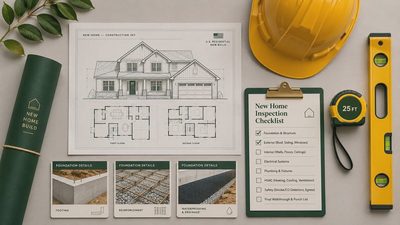
New construction has one particular trap: finishes can look excellent while the assemblies underneath have never been observed after completion. A standard, largely visual inspection cannot confirm every flashing detail, concealed fastener, or section of insulation behind finished surfaces.
Ask for relevant documentation, such as equipment manuals, available installation records, and warranty information. An inspector can compare visible conditions with accessible documentation, but a document is not proof that every concealed component was installed correctly. Where a finding suggests a hidden defect, discuss a targeted investigation with the appropriate qualified professional and obtain permission before any invasive work.
Pay attention to grading, drainage, roof-to-wall transitions, window perimeters, and mechanical-system operation. On a new house, the important question is not merely whether a system turns on. Ask whether the inspector observed a defect, what testing was performed, and whether a specialist should evaluate the installation further. A routine visual inspection is not the same as a full performance or commissioning test.
Close the loop before the deadline
Send the inspector a short list of unclear findings and ask what was observed versus inferred. Then obtain written evaluations or estimates from the right trades. For a complex structural concern, moisture problem, or repair involving several trades, an independent specialist can help define the scope before contractors price it.
Review any proposed correction for its actual extent. Replacing stained drywall without identifying a leak source may make the room look better while leaving the mechanism intact. Ask for photos of concealed work where practical, receipts, and a description of what was repaired. Arrange a reinspection when appropriate; a contractor's invoice is useful, but it is not a substitute for verifying the work.
The goal is not a report with zero comments. It is a ledger that separates confirmed repairs from open questions, with a credible next step and a responsible party for each. That is a much better use of a highlighter than counting how many pages came back red.




No letters yet — pray write the first.