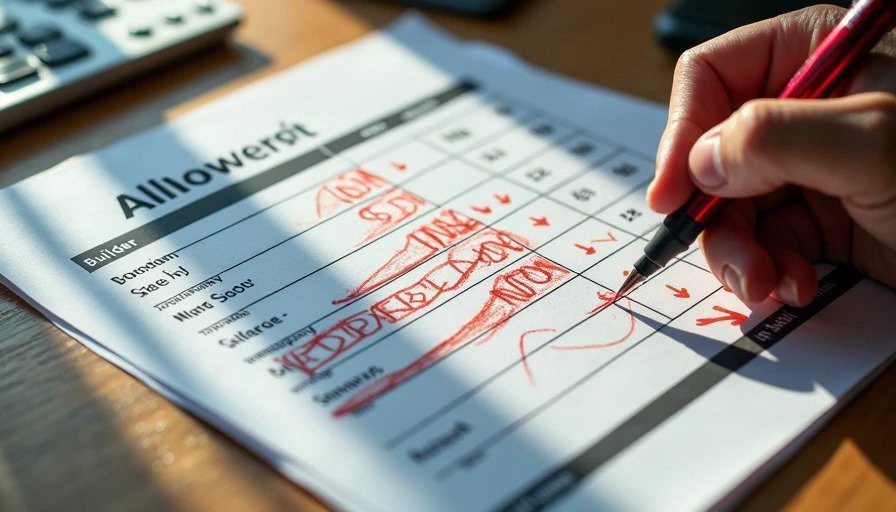
The glossy allowance sheet arrives with the contract. “Granite countertops: $8,500 allowance.” “Hardwood flooring: $12,000.” “Lighting package: $4,200.” It looks reasonable. Until you start selecting and the change orders hit.
I’ve reviewed hundreds of these sheets. Most are works of fiction—lowball numbers designed to make the base price look competitive while the real costs migrate to change orders with healthy builder margins. My CCP credential exists for exactly this kind of forensic cost work. Here’s how I tear them apart on every audit.
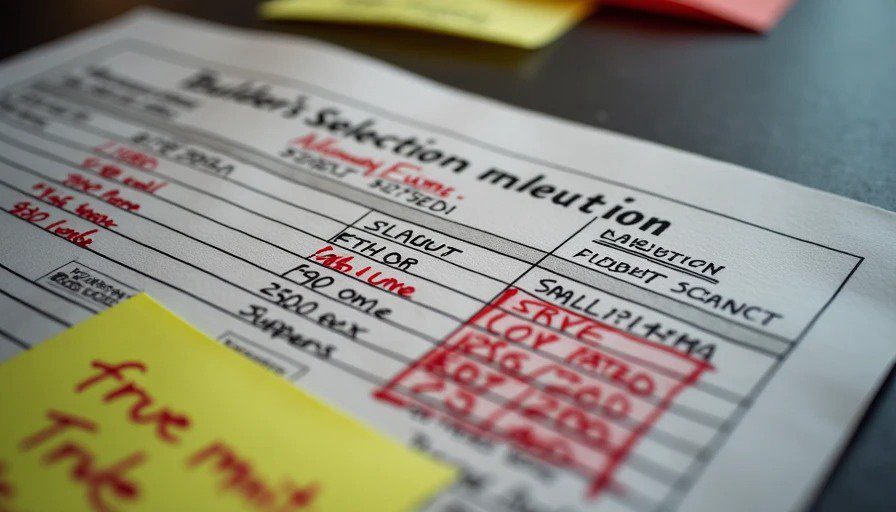
Why Allowances Are Structured to Surprise You
Builders use allowances for two main reasons. First, they let them control the base bid price to win the contract. Second, they shift selection risk and profit opportunity to the buyer. The allowance covers “builder’s cost” — not retail, not installed with their markup removed, and rarely including labor or coordination.
Common tricks I see repeatedly:
Understated Quantities: Allowance for 800 sq ft of hardwood when the actual floor plan needs 1,150 sq ft after waste and stairs.
Bare-Minimum Spec: “Granite” allowance often prices the thinnest, lowest-grade material. Upgrading to 3cm thickness or better patterning triggers big change orders.
No Labor or Markup Disclosure: The number might cover material only. Installation, substrate prep, and builder overhead get added later at premium rates.
Timing Games: Early allowances lock in prices before you’ve seen actual samples or understood site conditions.
One recent $1.8M build had a lighting allowance of $4,200. The homeowner’s selections came in at $11,800 installed. The difference wasn’t luxury fixtures — it was basic recessed cans and undercabinet lighting that any reasonable home needs.
How to Read the Sheet Like a Cost Professional
I approach every allowance sheet with the same checklist:
1. Break Down by Category
Separate material-only from installed costs. Ask for unit pricing: $X per sq ft for flooring, $X per fixture for lighting. Compare against current Austin market rates.
2. Verify Quantities
Measure the plans yourself. Builders sometimes use optimistic takeoffs that don’t account for waste, pattern matching, or cutoffs.
3. Understand “Builder’s Cost” vs. Your Cost
Allowances typically reflect what the builder pays their subs. You pay retail plus the builder’s coordination fee (often 15–25%) plus change order markup.
4. Check Upgrade Triggers
Many sheets have fine print: exceeding the allowance by even $1 triggers full markup on the entire category, not just the overage.
Real Examples from Recent Audits
Kitchen Countertops: $7,500 allowance sounded generous. Actual 3cm quartz with full-height backsplash and waterfall island: $19,200 installed. Gap: $11,700.
Flooring: $14,000 allowance for engineered hardwood. Premium wide-plank solid oak needed for the open floor plan: $26,500. The allowance barely covered the entry and hallways.
Appliances: $6,800 package. Buyer wanted reliable brands with matching finishes: $14,300. The allowance covered builder-grade units that would need replacement in 5–7 years.
These gaps aren’t accidents. They’re how builders recover margin on competitive base bids.
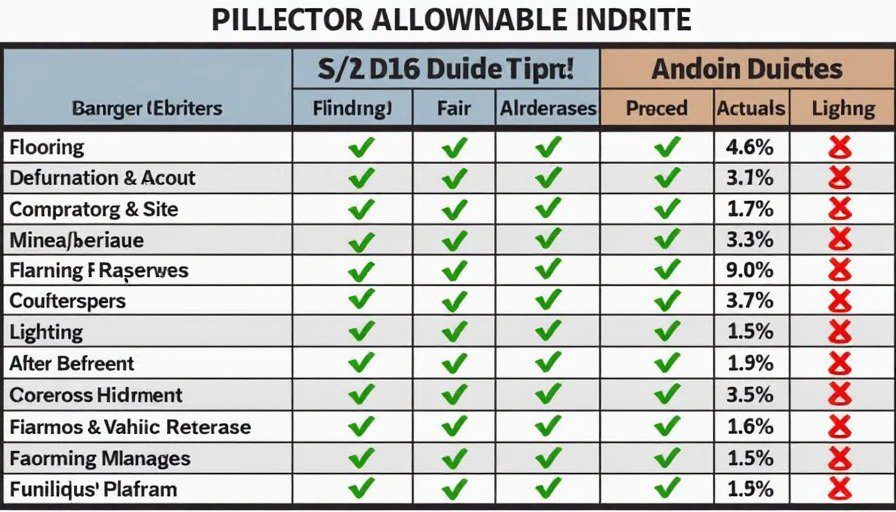
The Math Sarah Would Red-Pen in 12 Minutes
My wife teaches math. When she looks at these sheets, she spots the fiction immediately. Here’s a simplified real-world example I model for clients:
Category | Builder Allowance | Realistic Installed Cost | Difference | 5-Year Implications |
|---|---|---|---|---|
Countertops (quartz) | $8,200 | $17,500 | +$9,300 | Durability variance |
Hardwood Flooring | $13,500 | $24,800 | +$11,300 | Replacement cycle |
Lighting Package | $4,500 | $9,200 | +$4,700 | Energy & maintenance |
Appliances | $7,000 | $13,600 | +$6,600 | Early failure risk |
Total | $33,200 | $65,100 | +$31,900 | - |
This table doesn’t include the builder’s change order markup, which often adds another 20%. Suddenly that “competitive” contract price balloons.
I run these numbers against current supplier quotes and local labor rates. Material costs fluctuate, but the pattern of low allowances remains consistent across most production and semi-custom builders.
Negotiation Leverage and Reserve Planning
Armed with a proper cost audit, you gain real power:
Negotiate higher allowances upfront or fixed-price selections.
Request detailed unit pricing and quantity takeoffs before signing.
Build an accurate repair and upgrade reserve that reflects reality, not the fiction.
Time your selections to avoid rush pricing while still meeting construction schedule.
In several cases, my clients used the audit to shift $15,000–$40,000 in overages back to the builder or into seller concessions before closing.
Long-Term Cost of Playing the Allowance Game
Cheap allowances often lead to cheap materials that fail faster. Builder-grade appliances in the allowance sheet might last 7 years instead of 15. Thin countertops chip easier. Low-grade flooring shows wear in high-traffic areas quickly.
My 5-year repair reserve models always inflate categories where allowances forced compromises. That $31,900 gap above? It often turns into another $8,000–$12,000 in accelerated maintenance over the first decade.
Stop Guessing — Start Calculating
The allowance sheet is a sales tool, not an engineering document. Treat it like one. Measure quantities. Research market rates. Understand what’s included and excluded. Most importantly, attach real dollars to every line item before you sign.
This is exactly why cost audits exist beyond standard inspections. A checklist tells you the house has countertops. I tell you whether those countertops will cost you another $12,000 in the first year or last 20 years with minimal upkeep.
Next time you receive an allowance sheet, don’t just look at the totals. Dissect them. The difference between the fiction and the reality is often enough to fund a significant upgrade — or expose a budget hole big enough to drive a truck through.
Your new home deserves better than surprise invoices. Demand the numbers upfront. I’ll help you make them honest.





No letters yet — pray write the first.